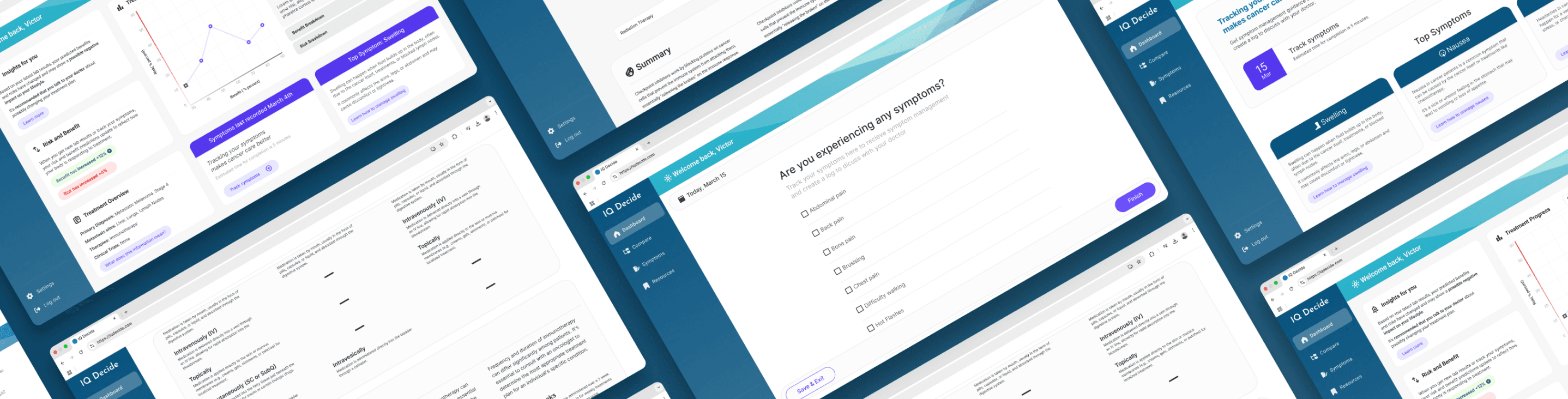
Transforming Oncology Decisions
Web-portal design for a healthcare startup leveraging AI to help patients and doctors make more informed cancer care decisions.
ROLE
UX Design Lead
Responsible for project quality end-to-end
High-fidelity prototype spanning a patient portal (dashboard, treatment comparison, symptom tracking) and provider interface (patient triage, shared decision-making view), validated through user testing.
Erin Brzezinski
Kaylie Milbeck
Rithika Rajesh
Healthcare startup (pro bono)
16 weeks
SCOPE
DELIVERED
CLIENT
TIMELINE
TEAM

IQ Decide built powerful AI to help cancer patients and doctors evaluate treatment options—but had no usable interface to deliver it.
THE PROBLEM
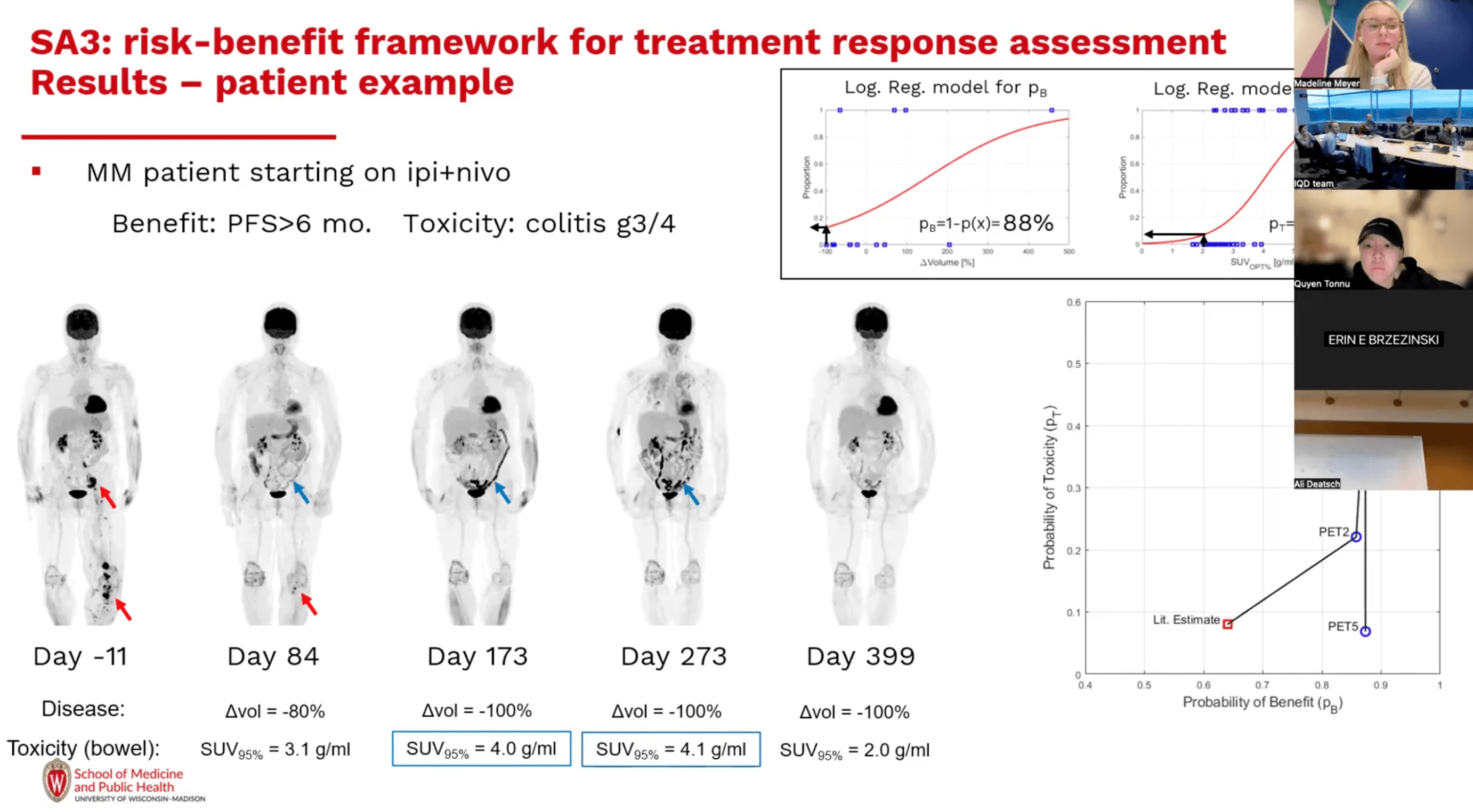
The startup's mathematical model could calculate personalized risk and benefit across treatment paths, but its only output was a research-grade scatter plot that neither patients nor oncologists could interpret. IQ Decide needed a portal that turned complex model outputs into something both audiences could understand, trust, and use to make decisions together.
Client research-grade visualizations blurred
Led the design direction for a team of four across a 4-month client engagement, responsible for the patient and provider portal end-to-end.
In practice, that meant owning the client relationship: preparing and leading stakeholder check-ins, translating clinical and technical feedback into design priorities, and aligning a research team's expectations with what a user-facing product actually requires.
A core challenge of this project was designing for a domain where we had no direct user access. Oncology patients couldn't be interviewed due to access constraints, which meant I had to design a research strategy that could build genuine empathy without traditional user interviews.
MY ROLE


The constraint:
The approach:
USER RESEARCH
We couldn't interview cancer patients directly. No IRB approval or clinical access. So we designed a secondary research strategy that could build empathy without traditional user interviews.
Each team member collected personal accounts from patients navigating metastatic melanoma treatment, sourced from Reddit threads, personal YouTube channels, and published patient narratives, alongside scholarly articles and clinical patient resources.
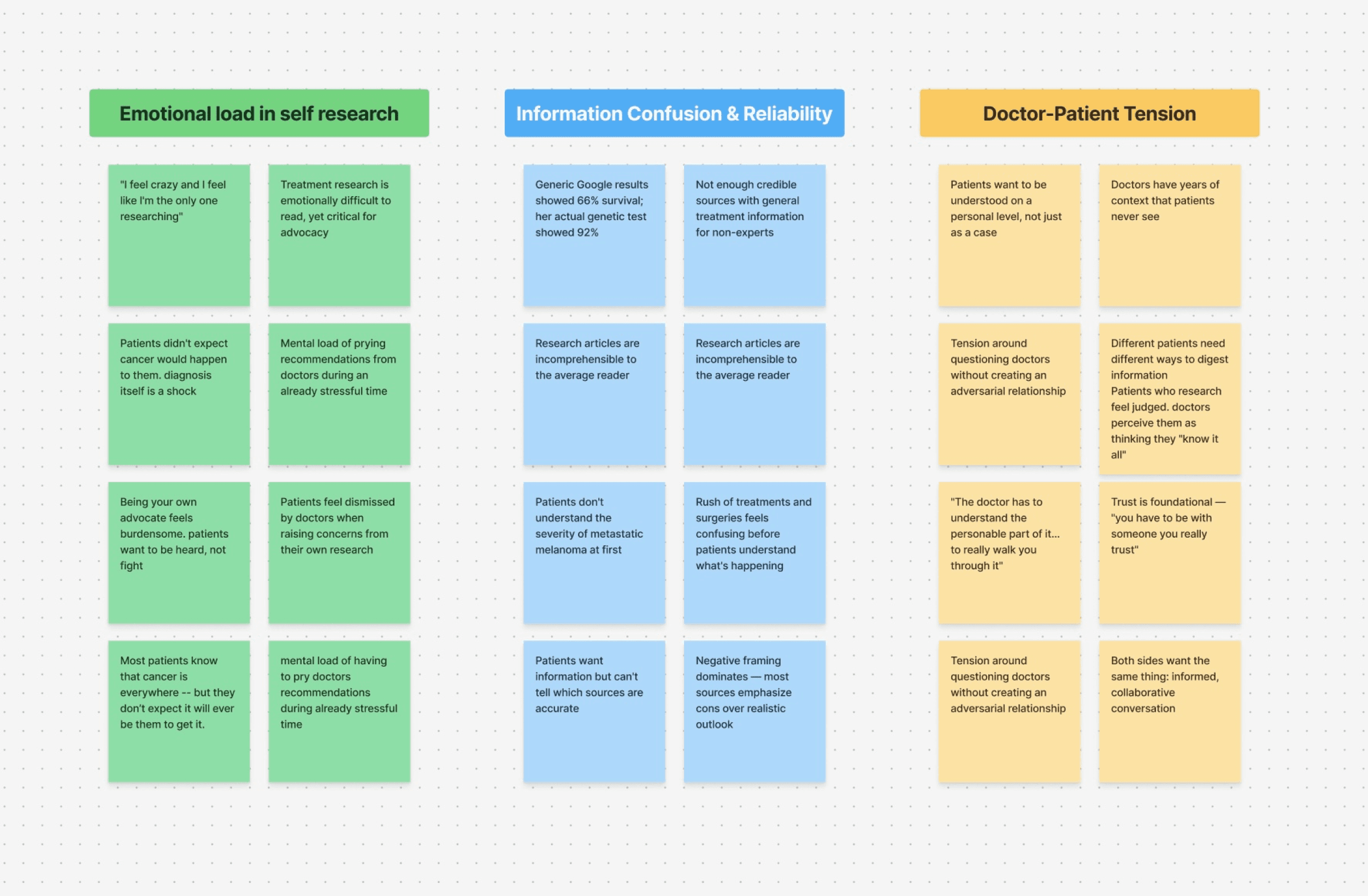
We gathered 50 personal stories and 50 patient-facing resources, then we looked to affinity mapping to synthesize them into themes.
What we found:
Seven themes emerged, but three had the most direct implications for our design.
Emotional load of self-research
Information confustion
Doctor-patient tension
Before designing any UI, we needed to understand what information existed, where it belonged, and who needed it when.
INFORMATION ARCHITECTURE
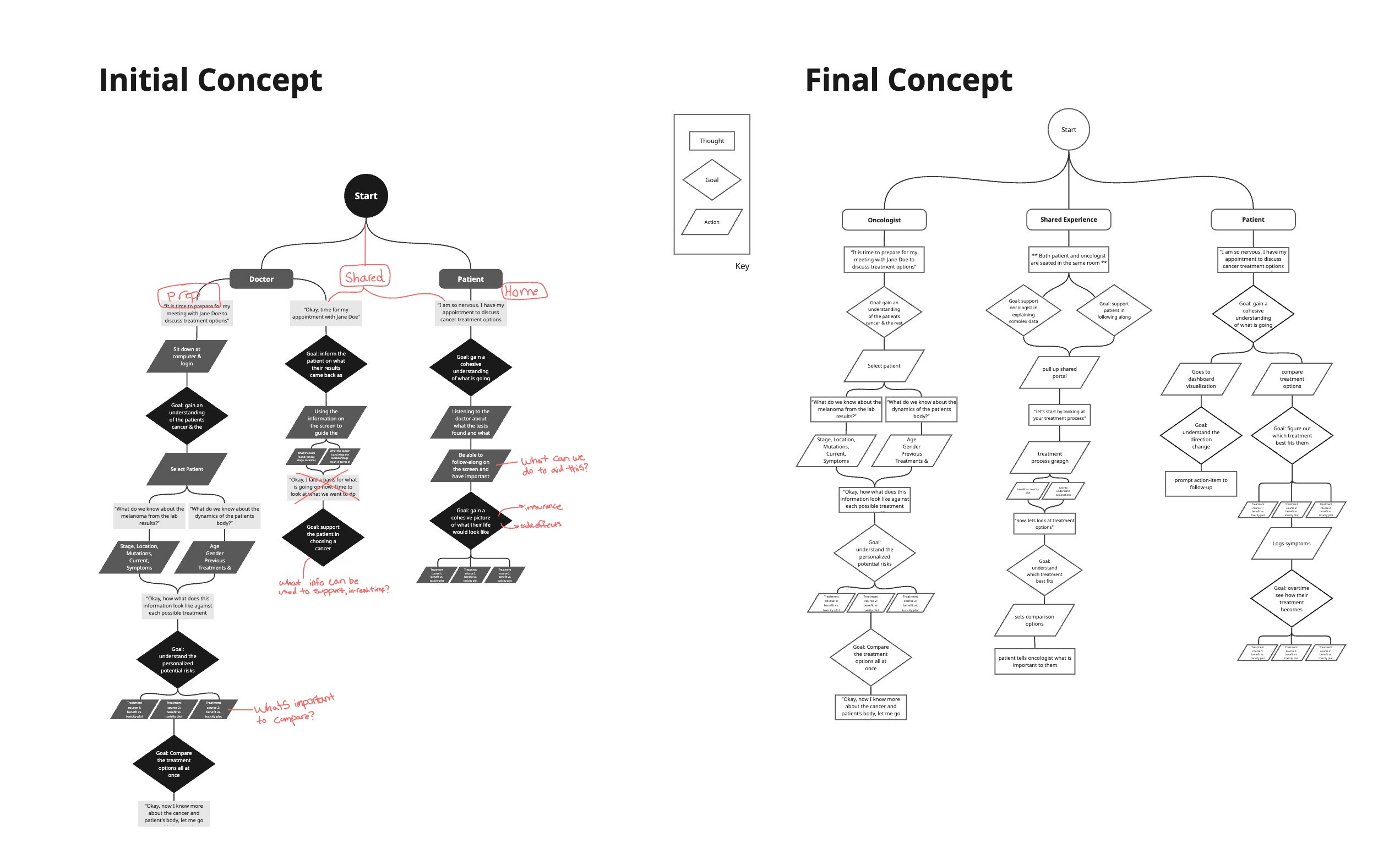
We mapped the full treatment decision journey from both the patient and doctor perspectives. This surfaced a key insight: both users needed the same core information, but at different moments and at different levels of detail.
The final architecture separated the experience into a patient view and a provider view, connected through a shared data layer.
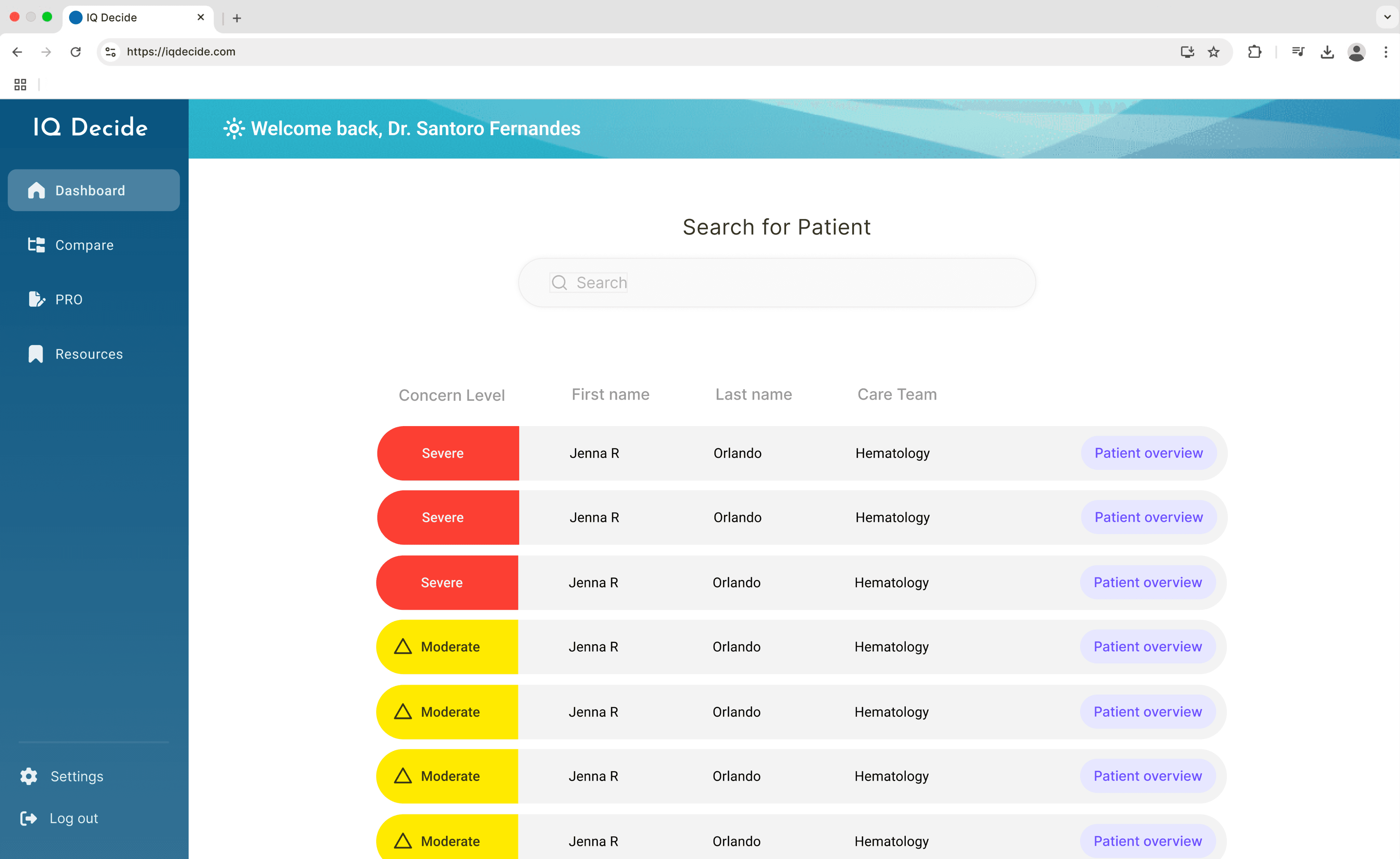
The patient side prioritized progressive access to information, such as diagnosis overview first, then treatment progress, then comparison tools. The provider side prioritized efficient triage, such as patient list sorted by concern level, quick access to detailed breakdowns, and the ability to switch into a shared view for in-appointment conversations.
01 – Information Ecosystem
02 – Site Architecture
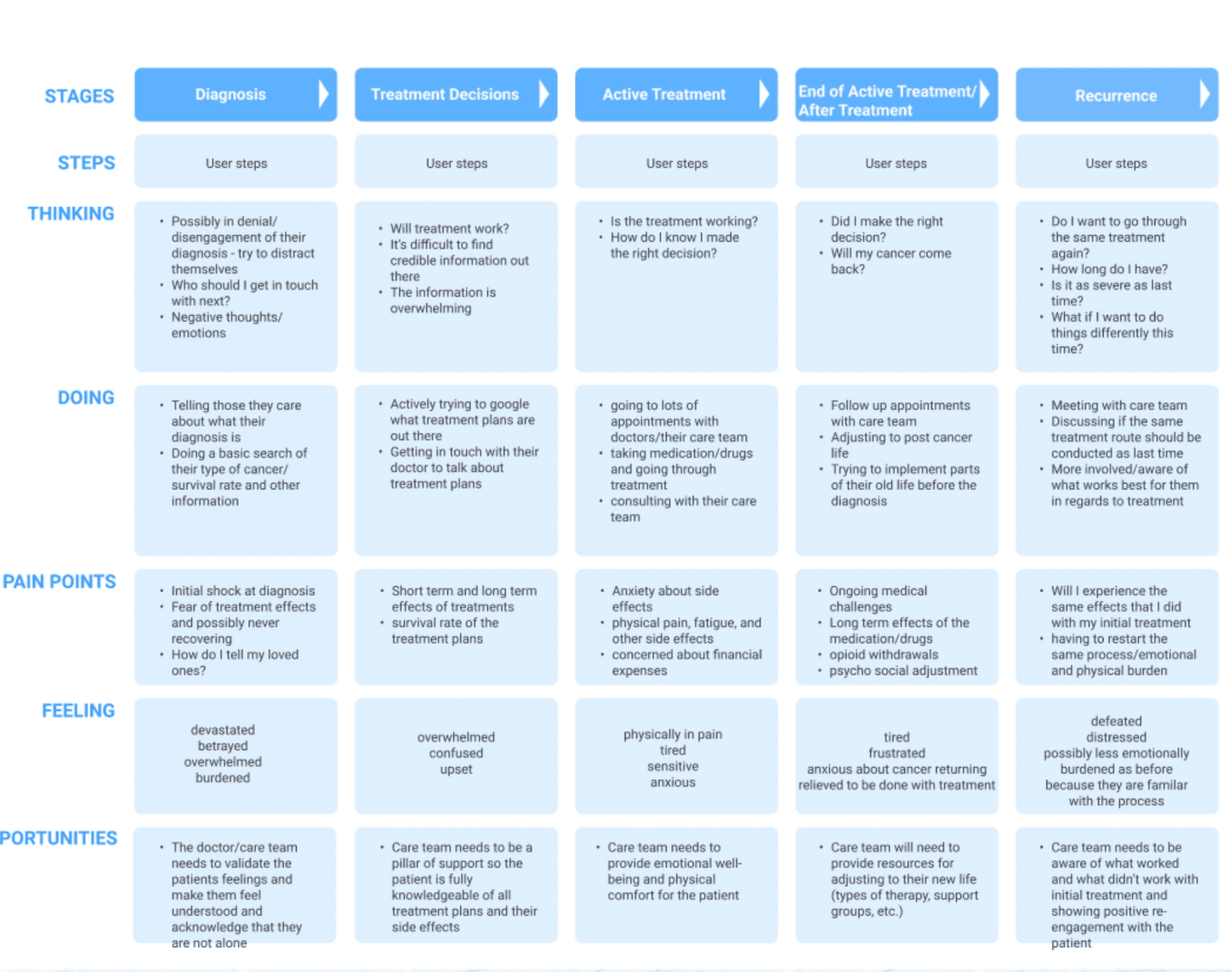
With a clear understanding of the information landscape, we moved from architecture into prototyping interfaces that both patients and providers could actually use.
PROTOTYPING
Dashboard & Treatment Progress Graph
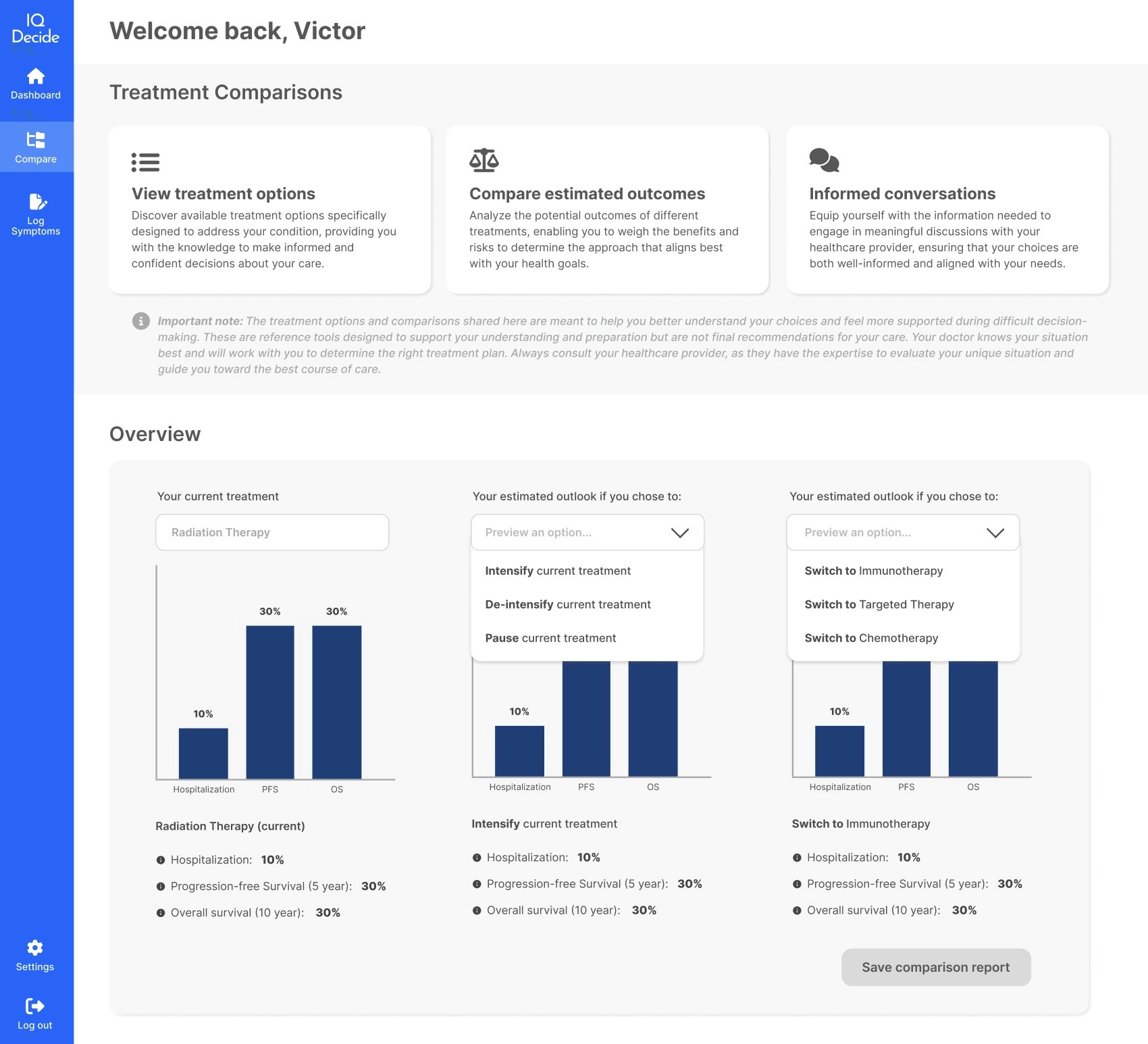
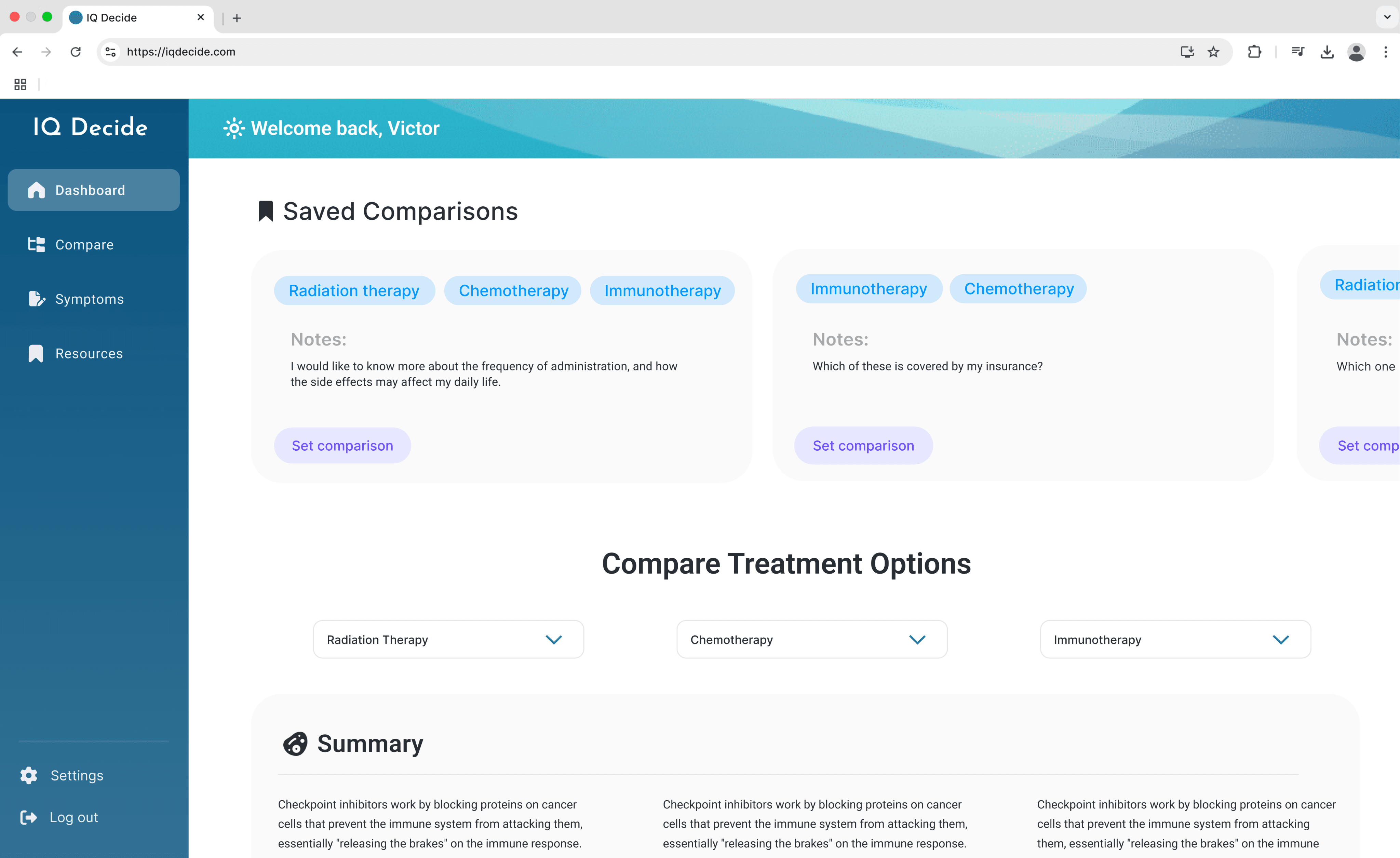
Compare Treatments
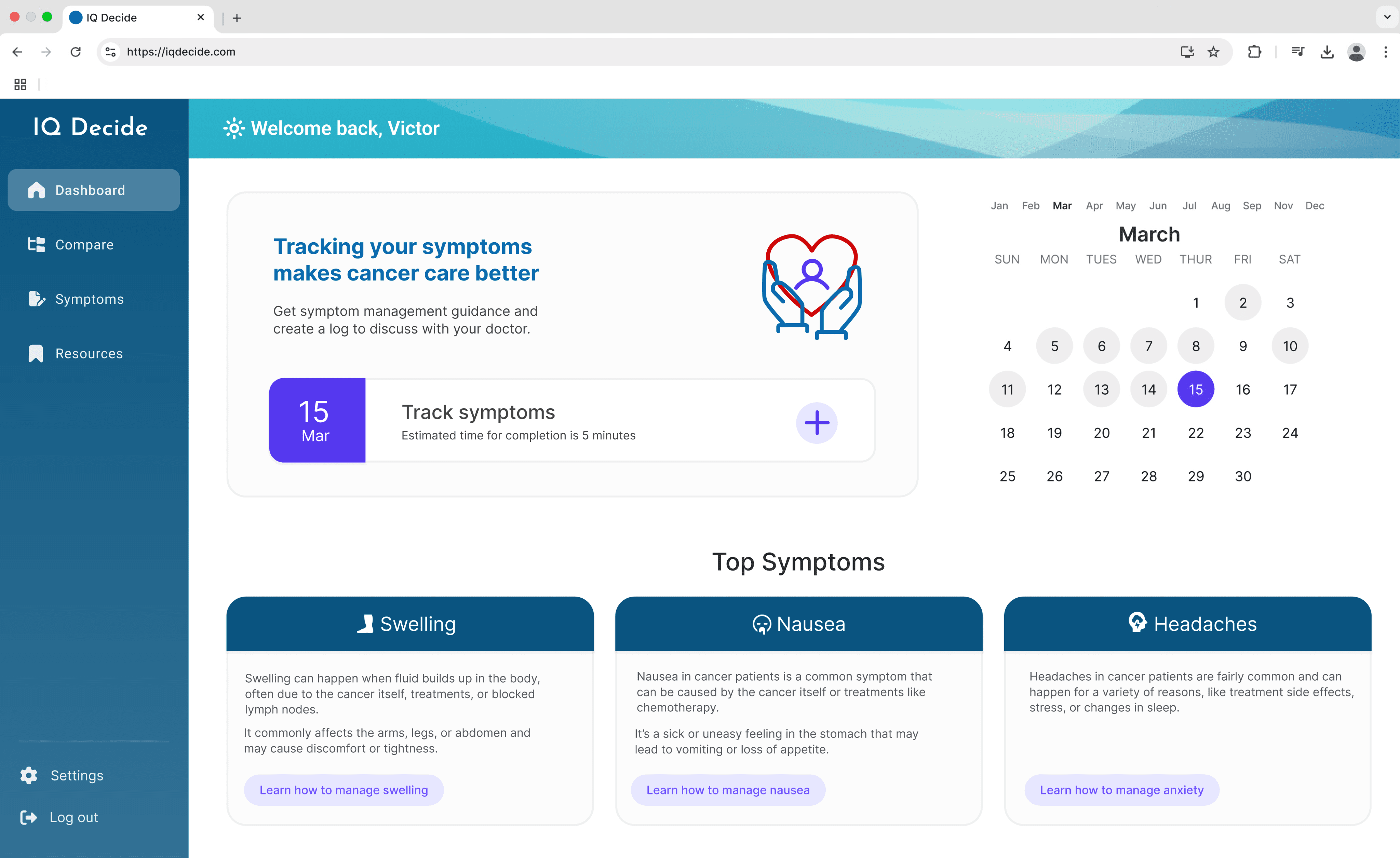
Patient-Reported Outcomes
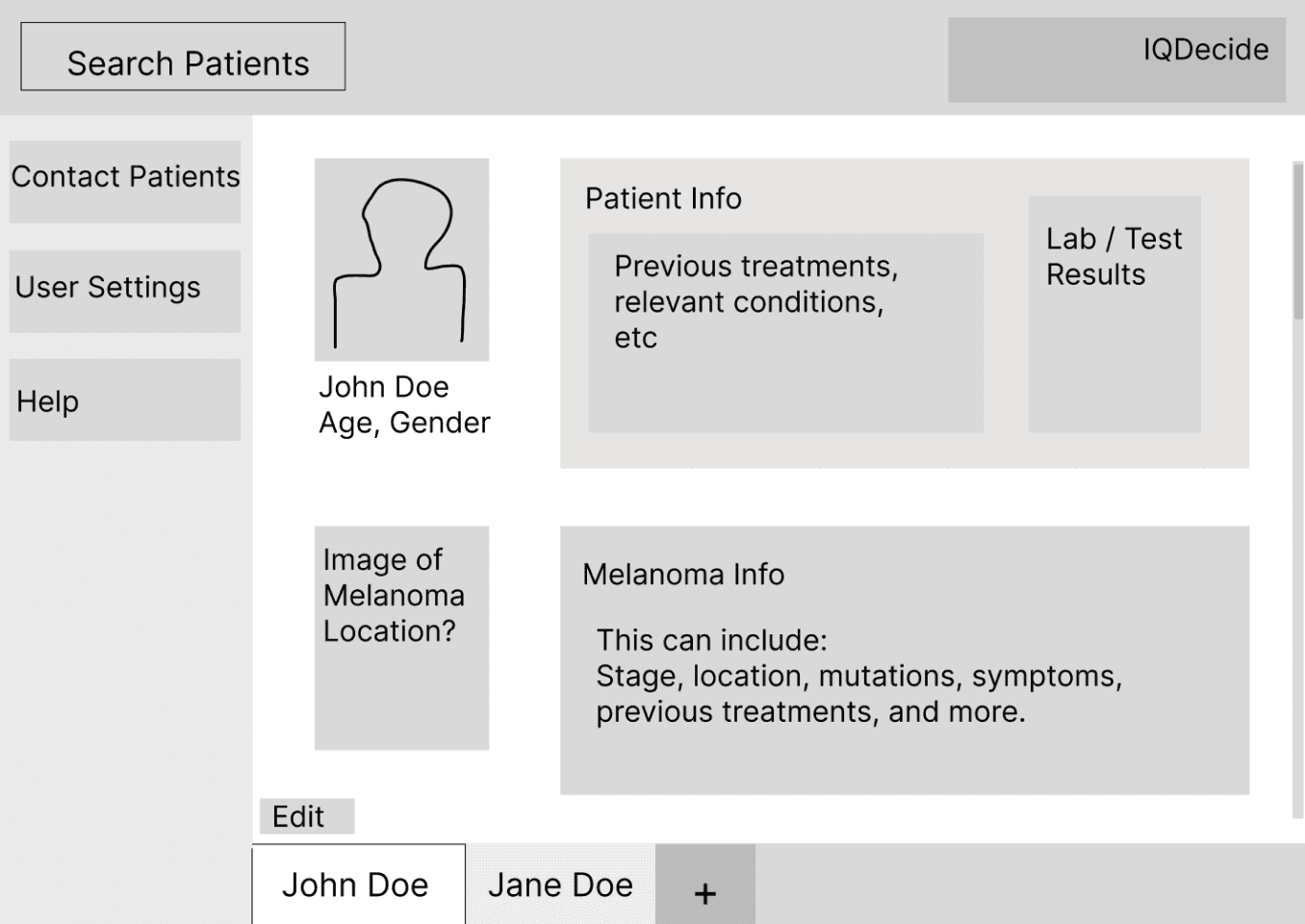
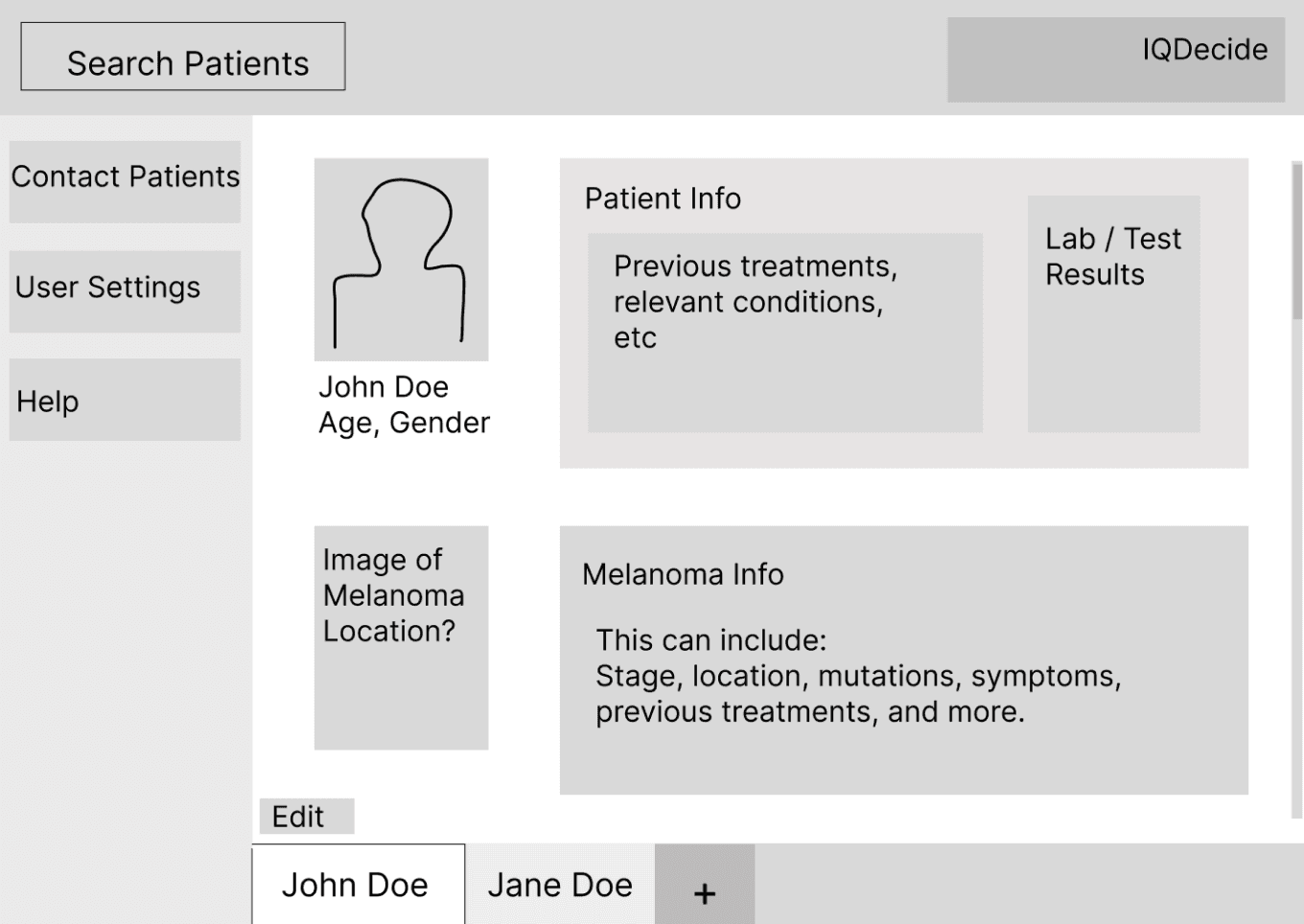
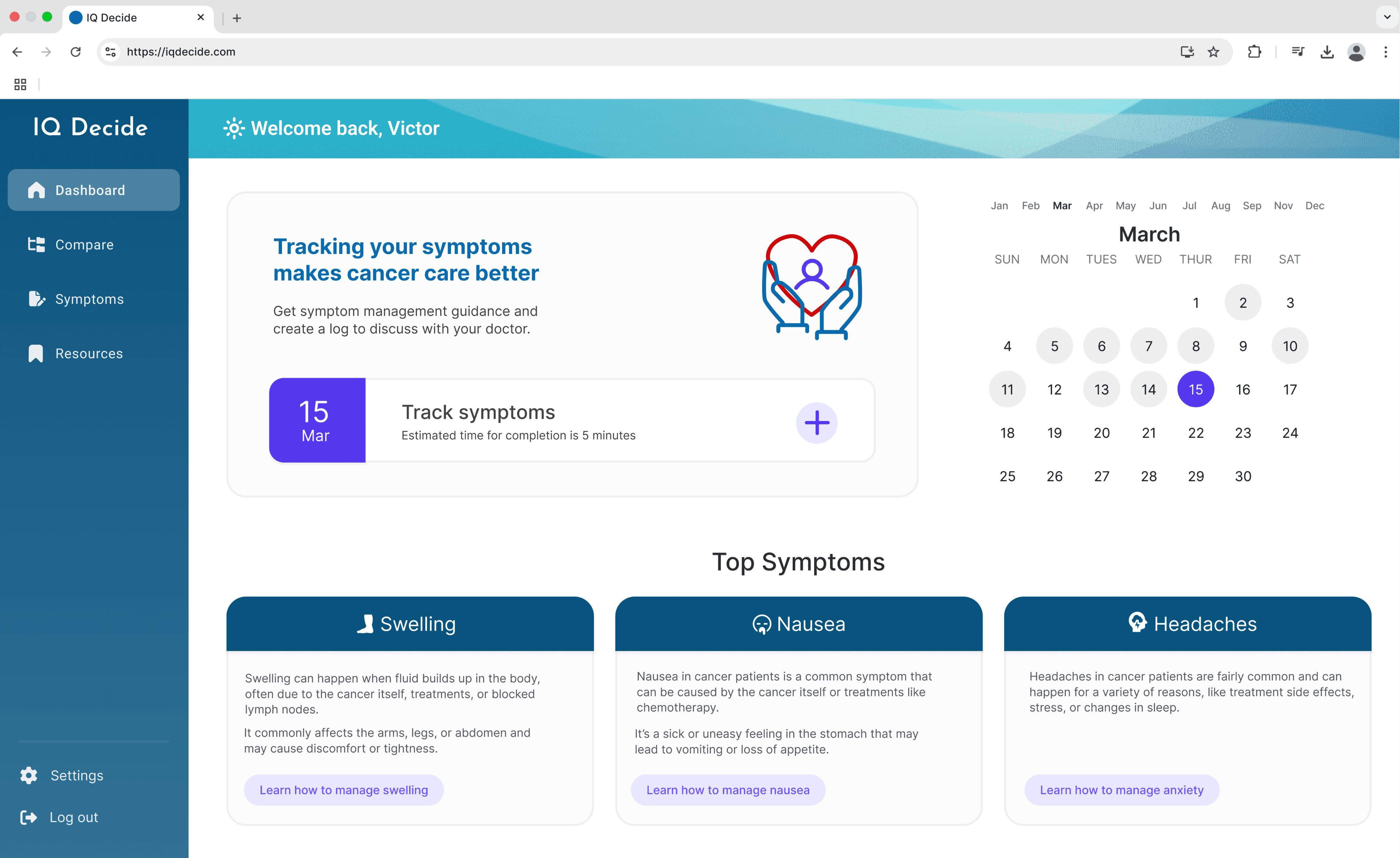
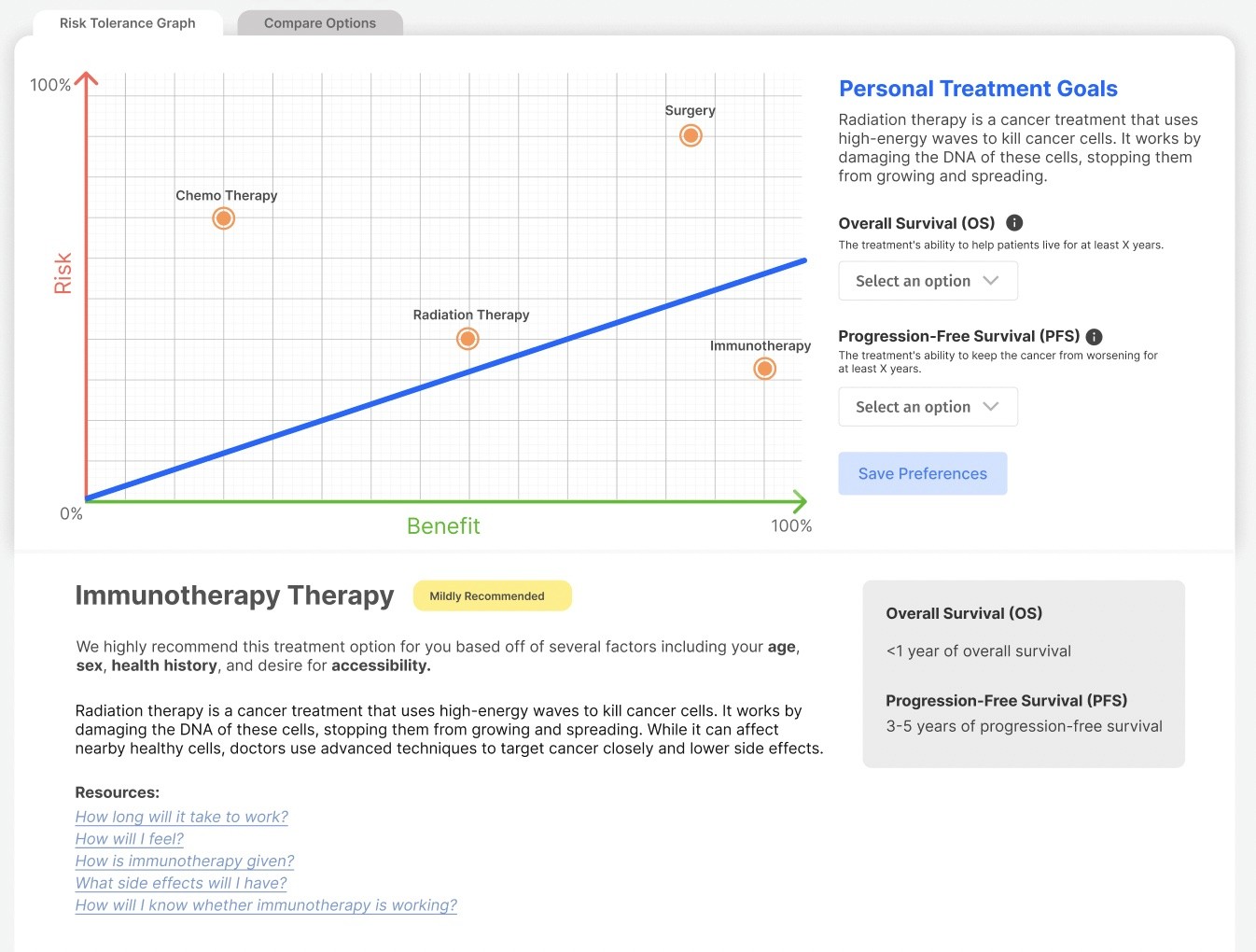
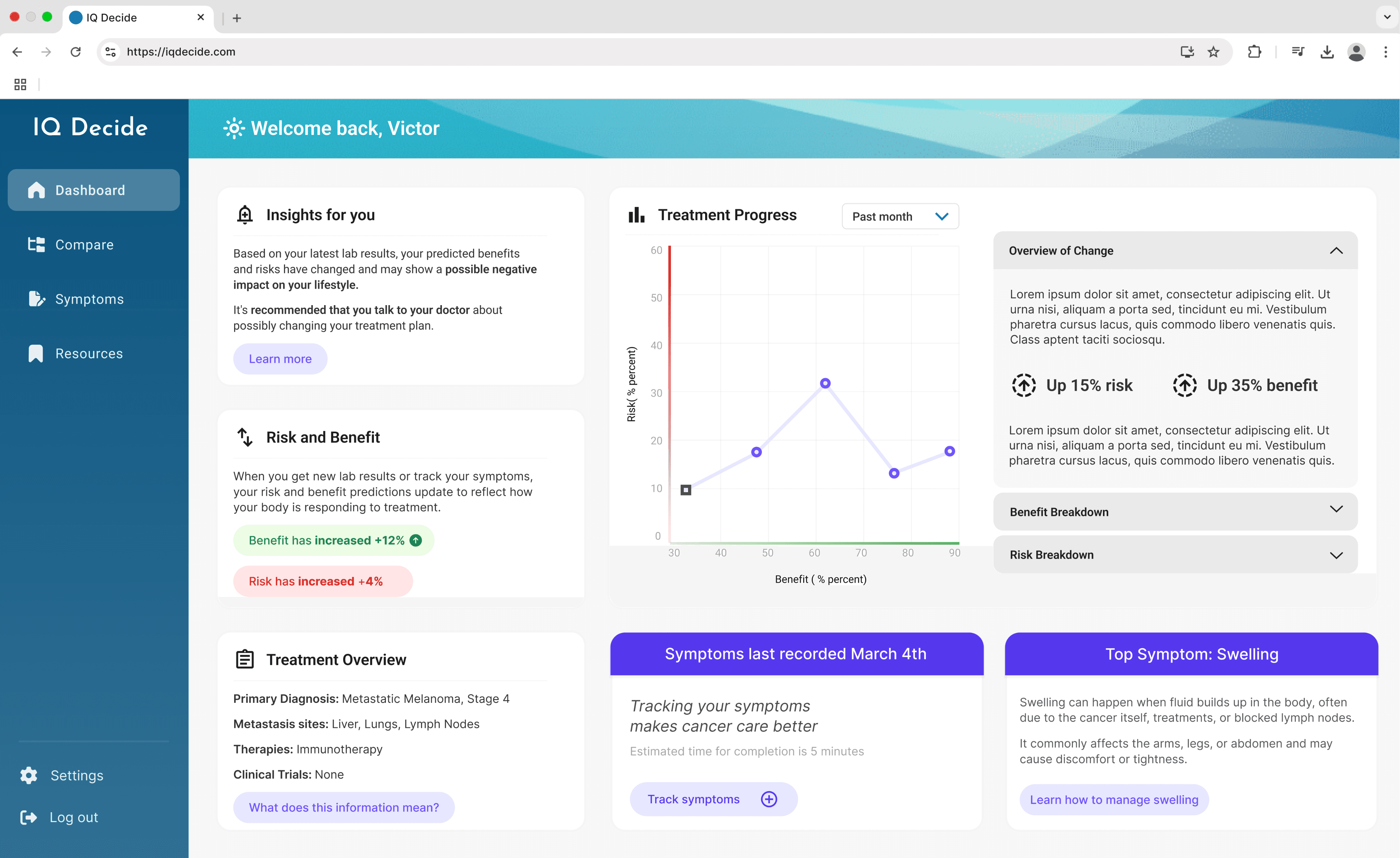
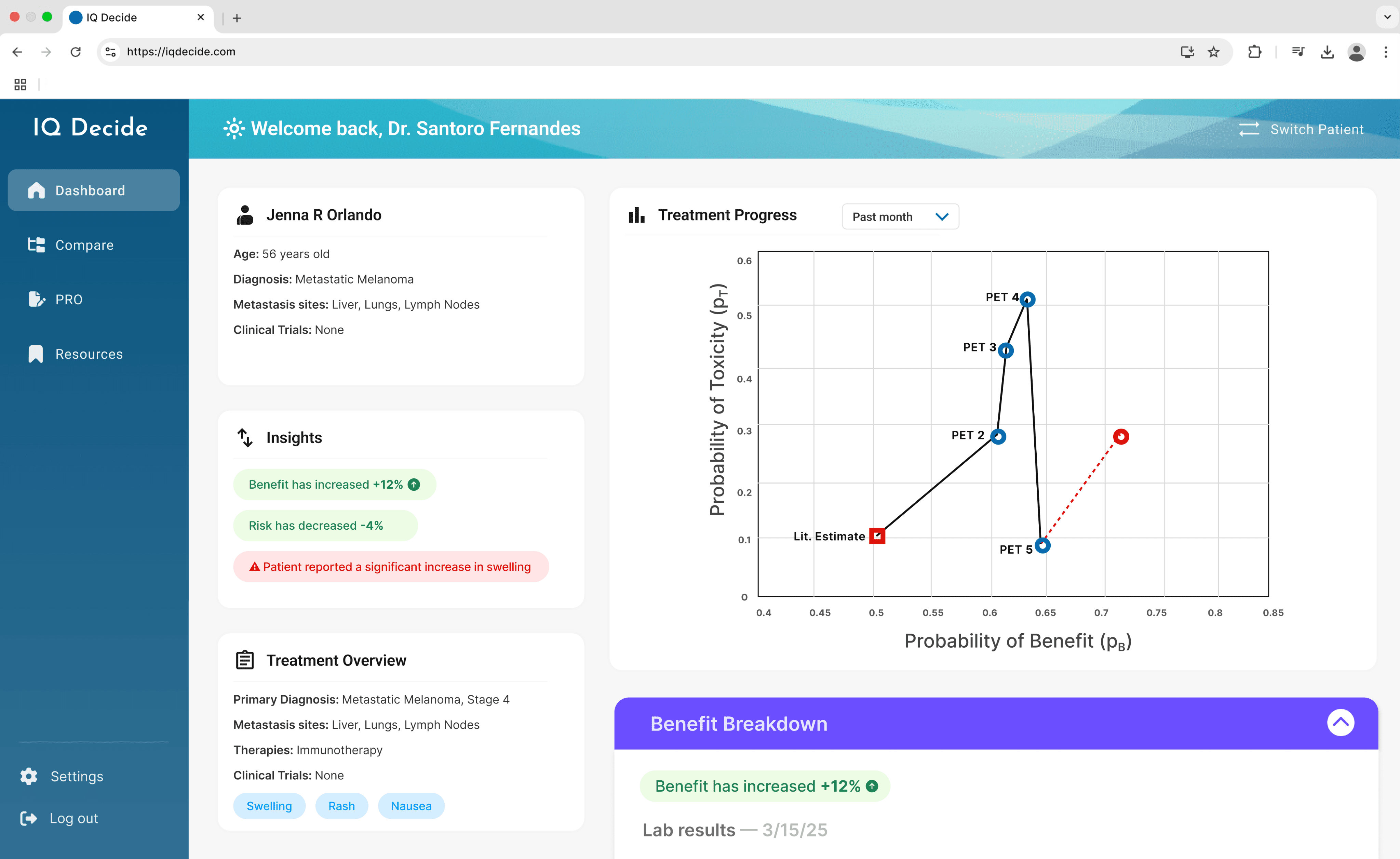
The dashboard is the first thing a patient sees after logging in. It hosts IQ Decide's core feature—a risk-benefit graph showing how a treatment is affecting the patient's health over time.
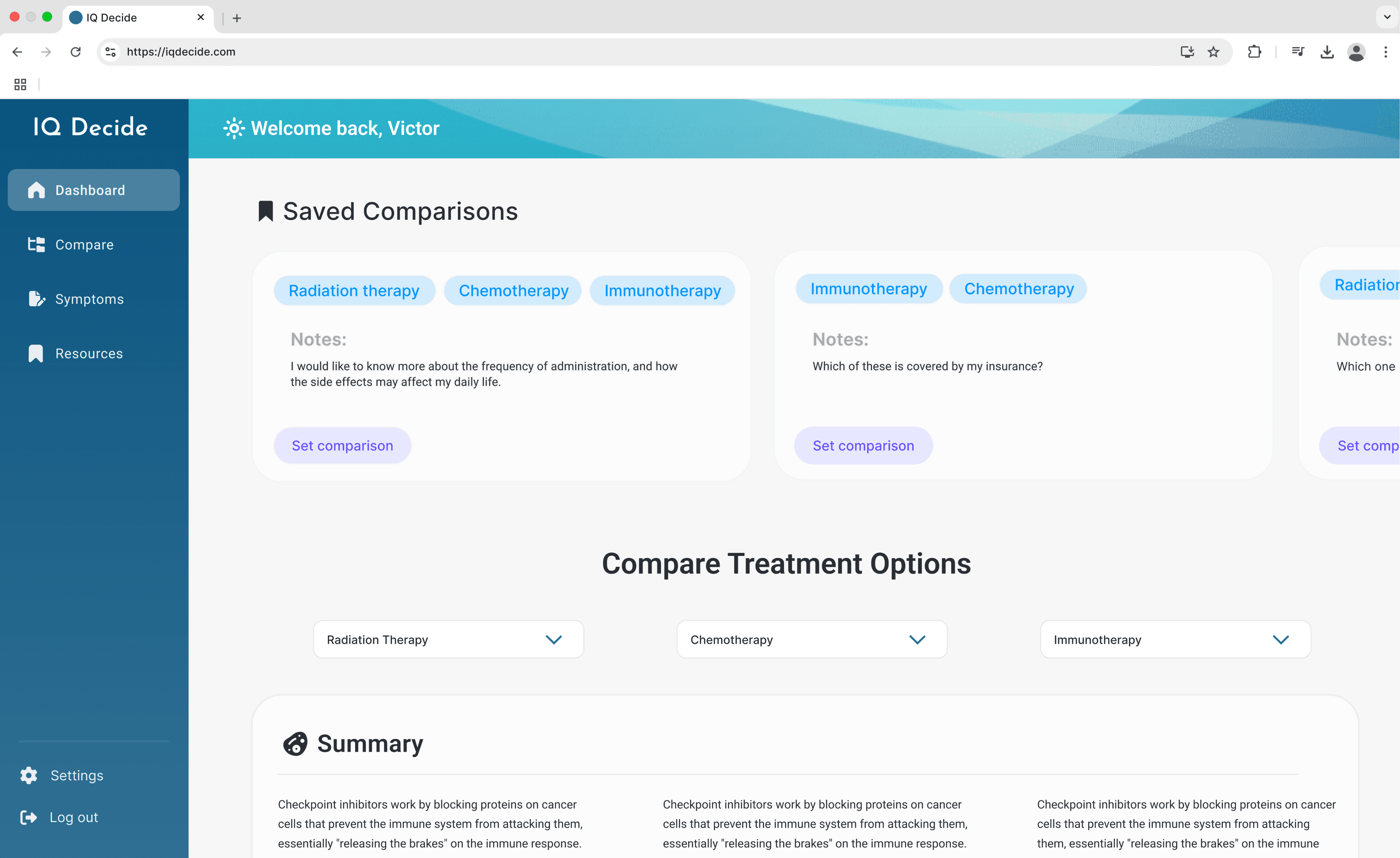
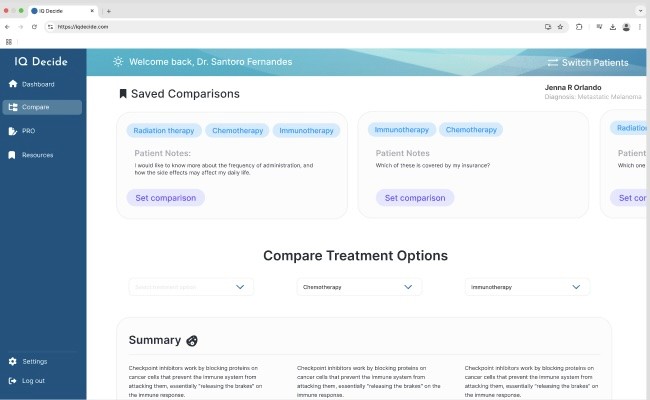
Patients typically receive paper handouts about their treatment options. The compare page digitizes that process, letting patients weigh trade-offs side by side.
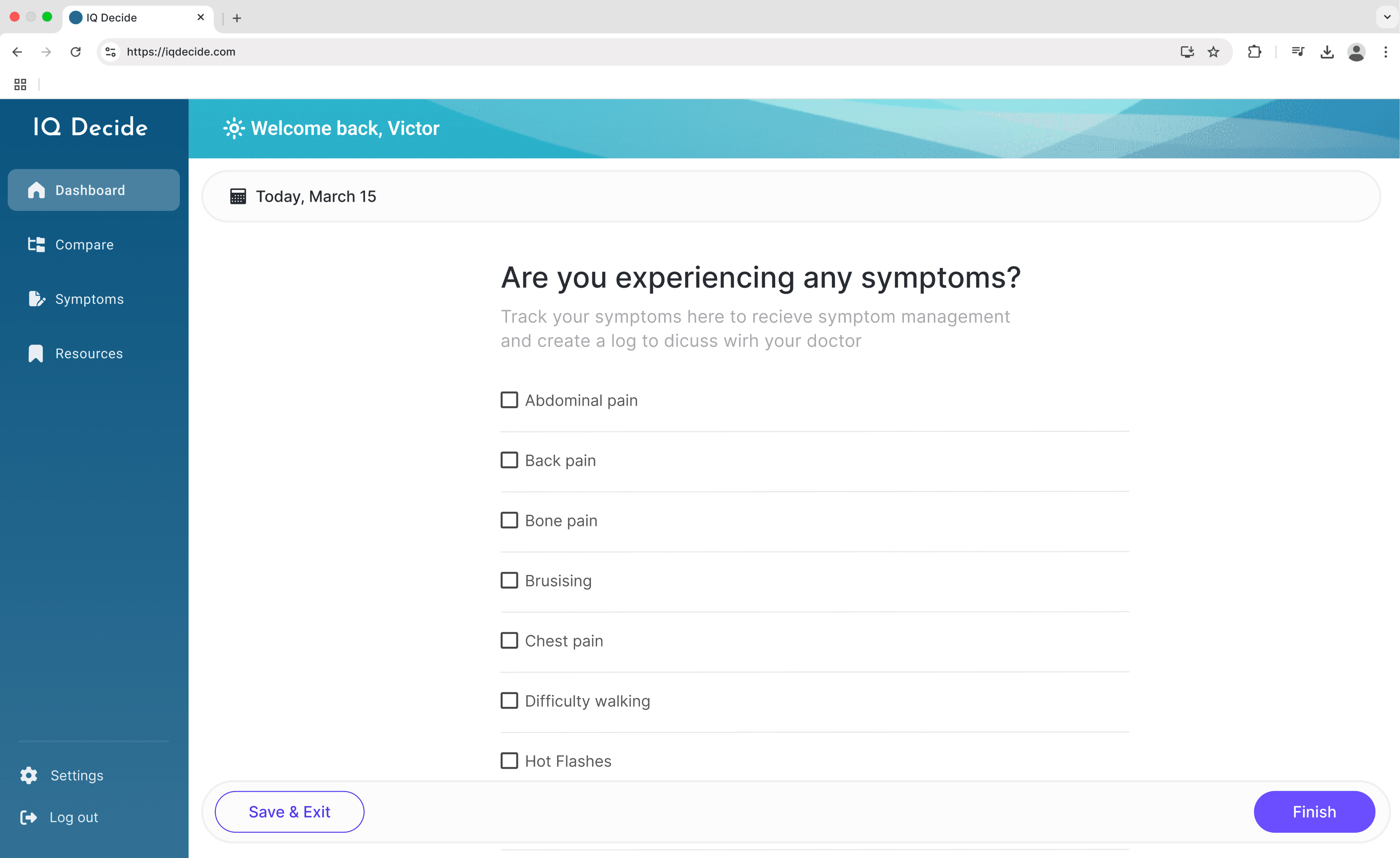
Tracking symptoms leads to better treatment outcomes. The PRO page needed to be quick, low-friction, and useful to both the patient and their care team.

😊
😊
😊
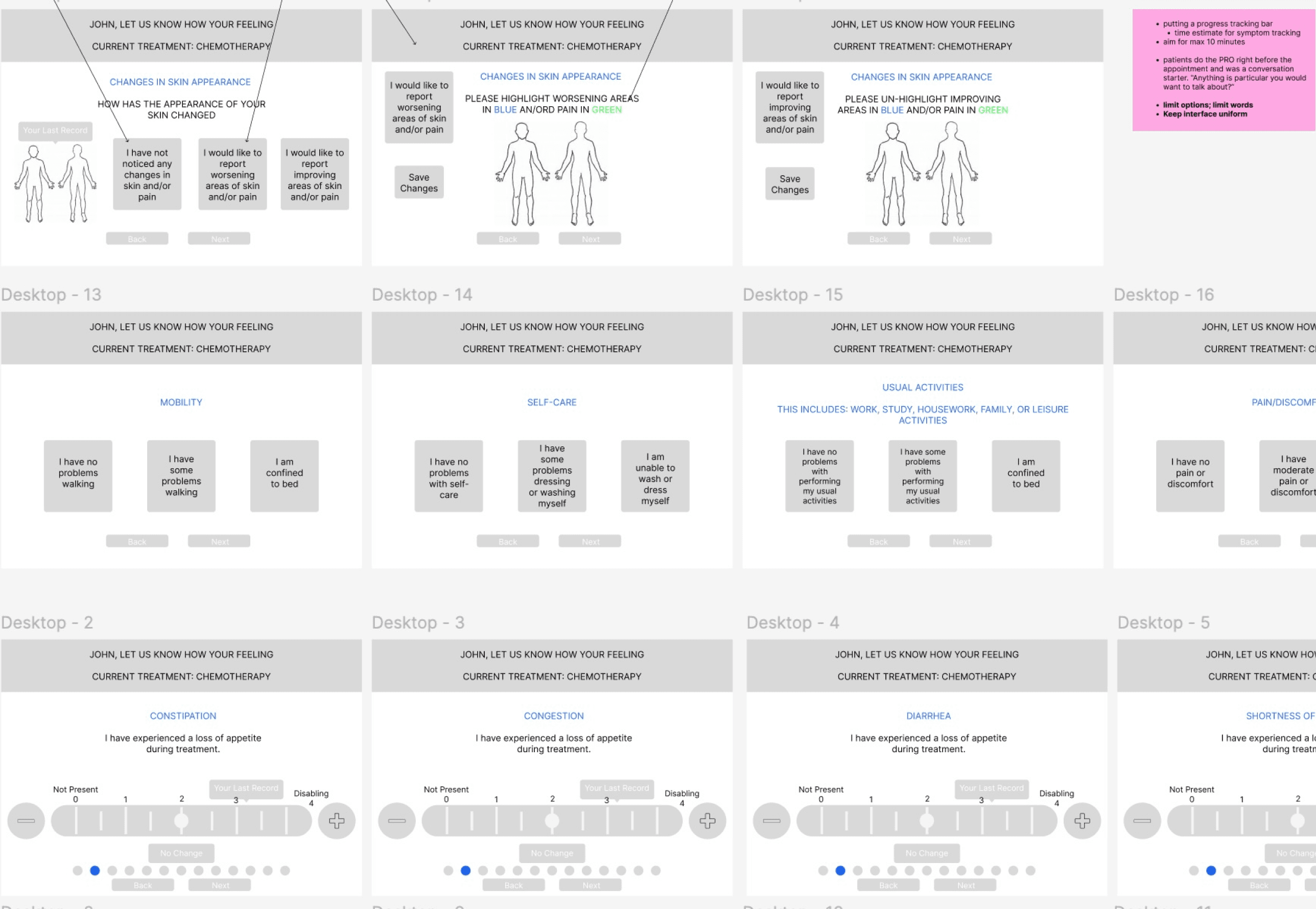
PATIENT INTERFACE
The patient side of IQ Decide needed to do three things: help patients understand their treatment progress, compare their options, and track how their body was responding.
Treatment Overview
Symptom Care
Progress Graph
Simplified information display and added pop-up links for patients who wanted more details.
Featuring a clear call-to-action for patients to log symptoms and learn more about their management.
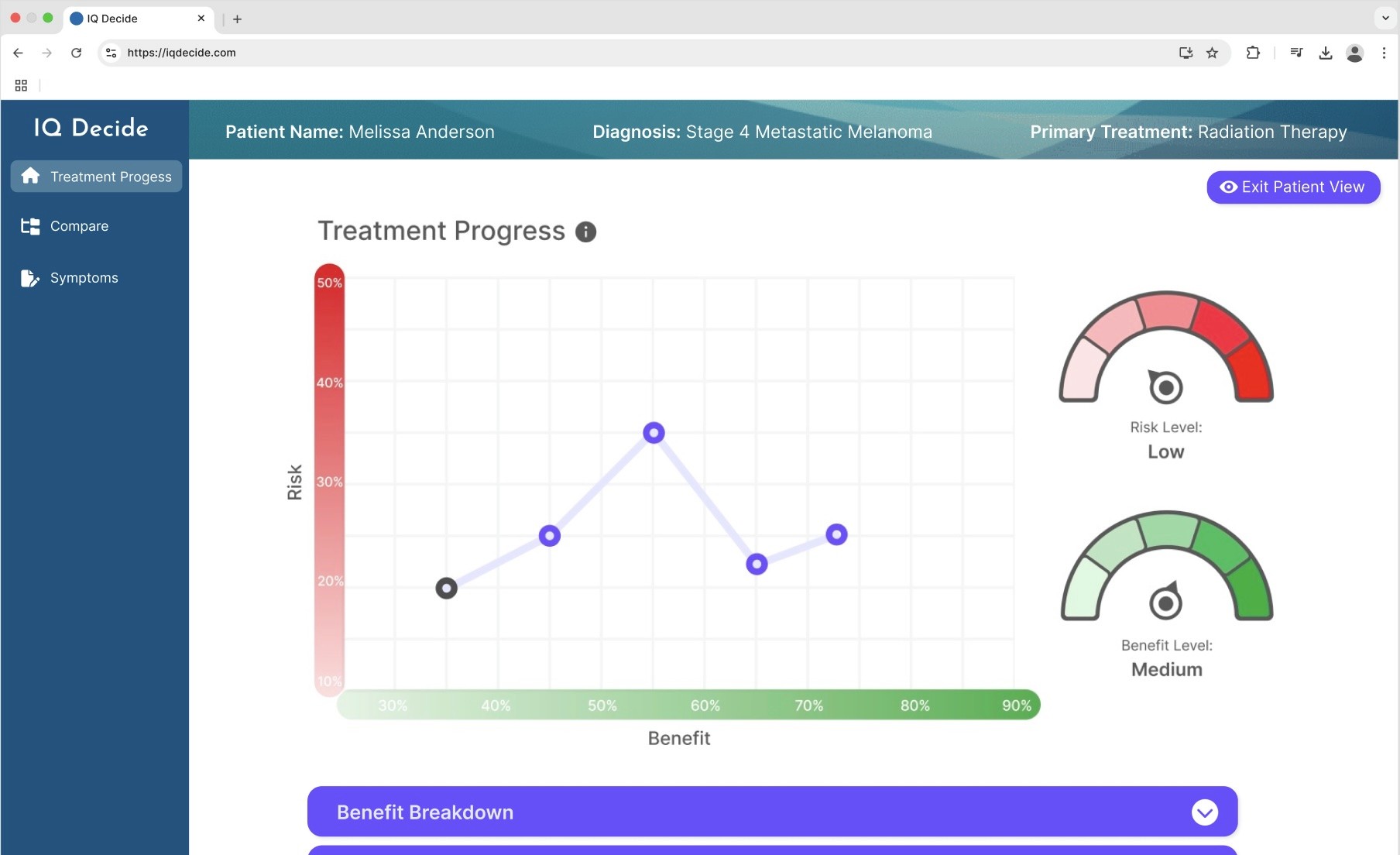
Used color coding to reinforce the concepts visually. Added speedometer-style indicators that highlight each data point’s meaning.
Dashboard & Risk Graph
Comparing Treatments
Patient-Reported Outcomes (PROs)
Saving Comparisons
Comparison Chart
way for patient to remember to which comparisons that interested them to discuss with doctor
can add notes
document concerns

icons to reiterate message
standardized information

Symptom Management
Tracking Calendar
Patient can keep track of how often they have been recording their symptoms.
Information about the patients top concerning symptoms and easily digestible information about how to manage the symptoms at home.


FINAL DESIGN
PROVIDER INETRFACE
The provider side needed to give oncologists efficient access to their patients' data, surface what's changed and what's concerning, and support in-appointment conversations.
Patient Triage
Ecosystem
Overview
Symptom Management
Symptom Management
Tracking Calendar
Tracking Calendar
Patient can keep track of how often they have been recording their symptoms.
Patient can keep track of how often they have been recording their symptoms.
Information about the patients top concerning symptoms and easily digestible information about how to manage the symptoms at home.
Information about the patients top concerning symptoms and easily digestible information about how to manage the symptoms at home.
Patient
Provider
Shared Interaction – Provider & Patient
The patient side of IQ Decide needed to do three things: help patients understand their treatment progress, compare their options, and track how their body was responding.
OUTCOME & REFLECTION
We delivered a high-fidelity Figma prototype spanning the full patient portal (dashboard, treatment comparison, symptom tracking) and provider interface (patient triage, detailed patient view, shared decision-making mode), validated through user testing with the IQ Decide team.
What would I do differently next time?
I'd get clearer, faster about what we don't know.
This project had one of the steepest learning curves I've experienced. We were designing for oncology treatment decisions with no medical background, working alongside researchers and clinicians who were deep experts in their field. They didn't always know what we didn't know, and we didn't always know what to ask. Early on, that gap cost us time as we designed around assumptions that later needed correcting.
Also, because IQ Decide was a startup, they were still figuring out what they wanted the product to be. Learning to articulate our design decisions and methodology became one of the most valuable skills of the project. It helped the client clarify their own thinking and gave us a shared language for making decisions together.