Courtyard Re-design
Fostering connections with the self, nature, and community through a student courtyard re-design.
TEAM
Independant
Environmental & Architectural Design @ UW–Madison
Spatial Design
Life-cycle Analysis
3D Modeling
Summer 2024
CONTEXT
SKILLS
TIMELINE
The Kronshage dorms at UW–Madison feature a courtyard that is currently underused and shaped by inconvenient pathways. In this course, our task was to redesign the space in a way that more intentionally supports student wellbeing.
SUMMARY
SUMMARY
Site Analysis
Conceptual Diagramming
2D & 3D Modeling
RESEARCH
Site Visit
Inventory Analysis
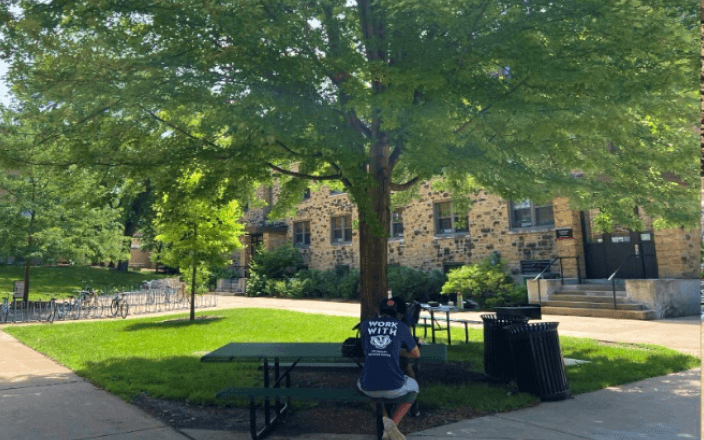
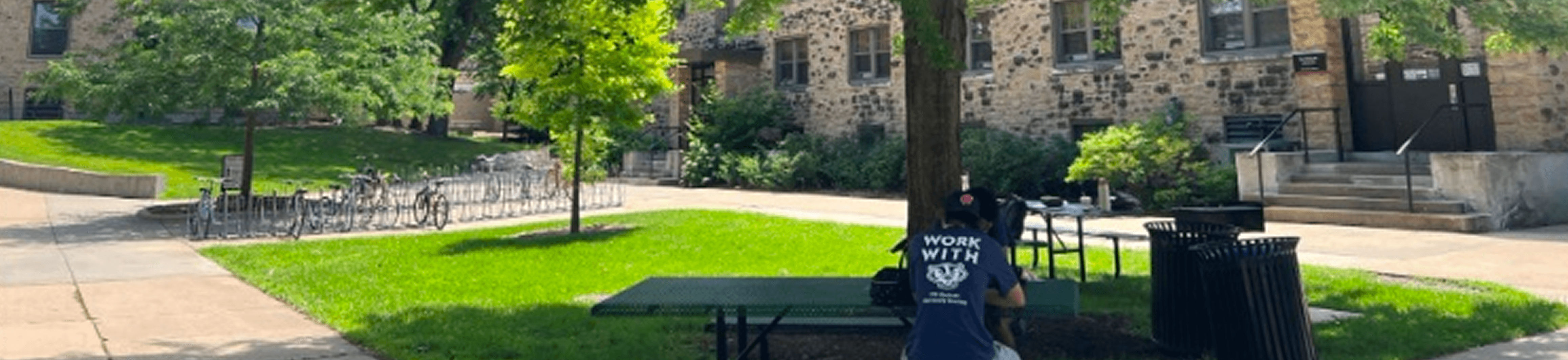
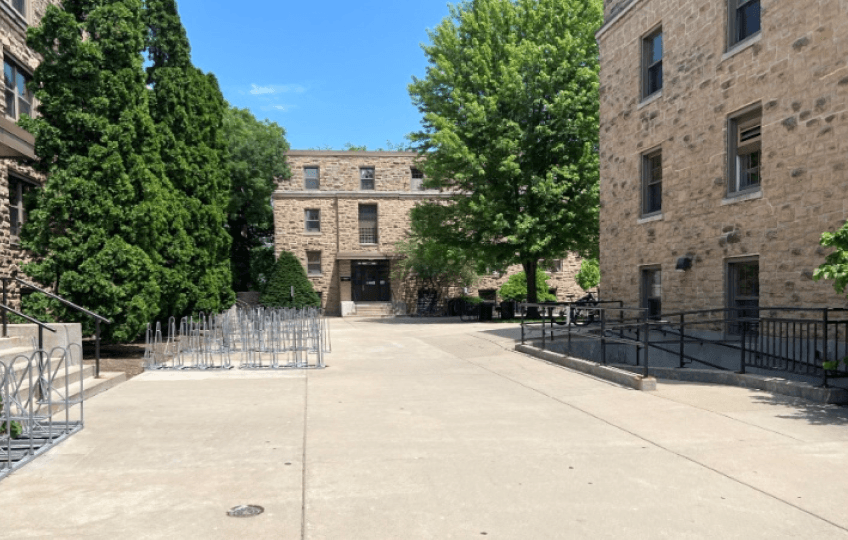
I began by visiting the site to get an understanding the physical conditions, context, and character of a courtyard. The goal of this step was to not to categorize bad or good traits just yet, but rather to objectively record what was already at hte site.
Next, I labeled the site’s components as either good, bad, or neutral traits in order to identify pain-points. I found that there was:
people cutting across the grass area in the center
bike racks dominated the pathway
only two picnic benches serving four surrounding dorms.
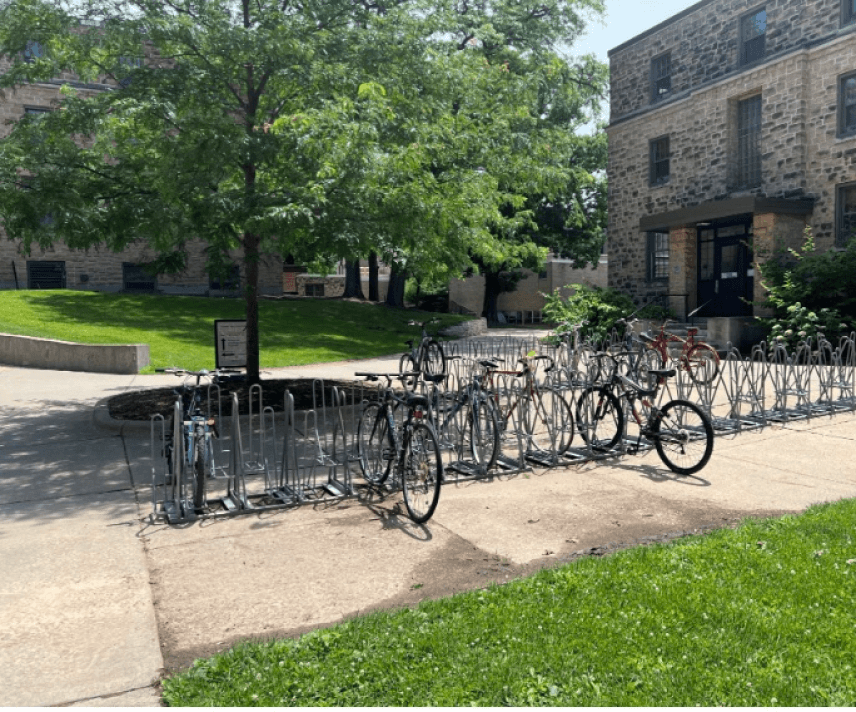
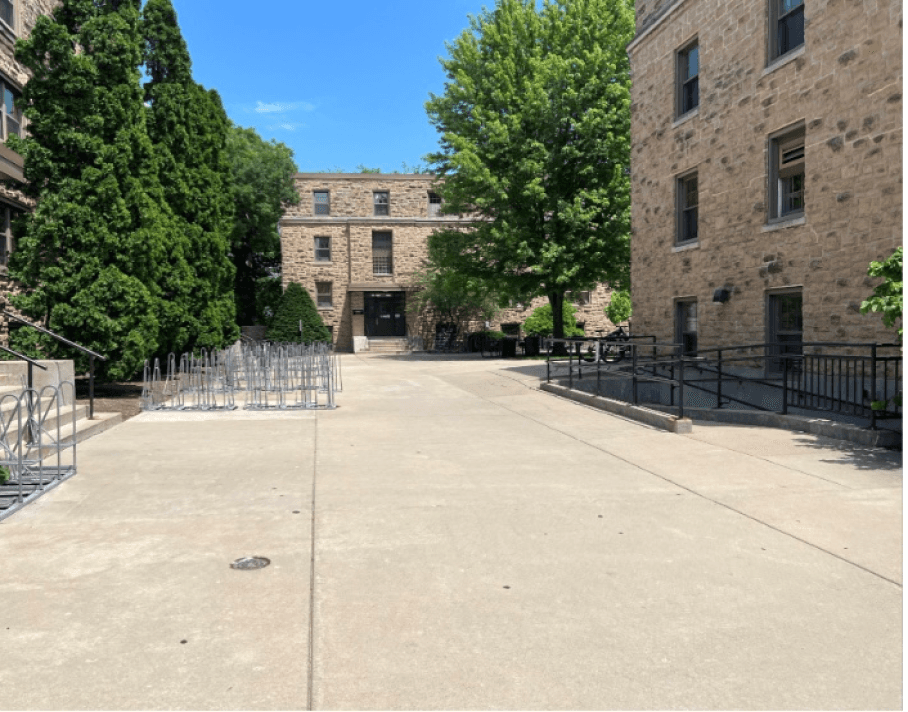
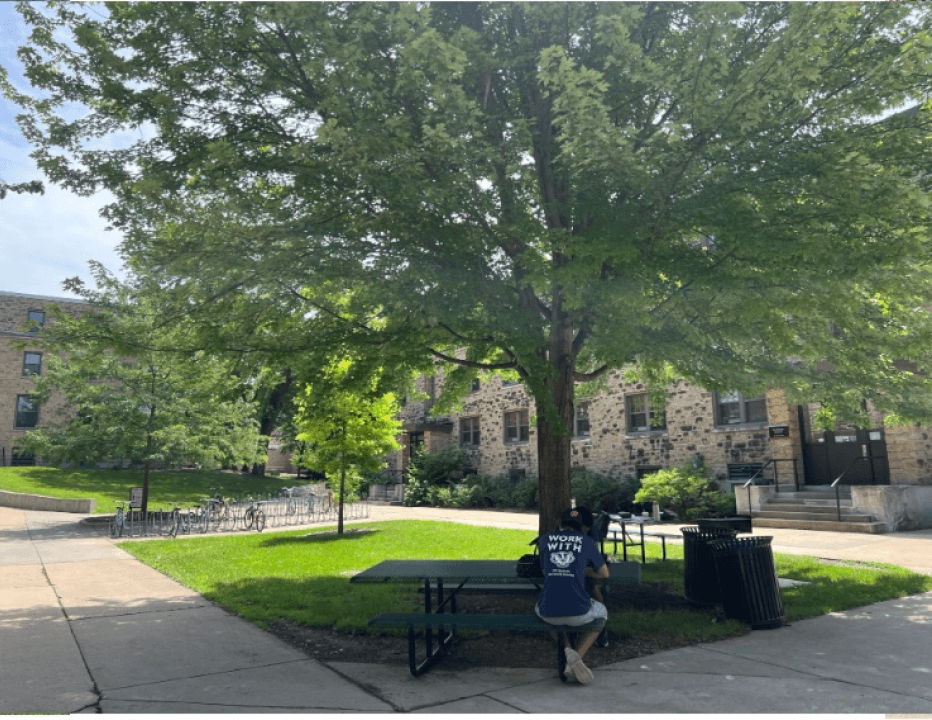
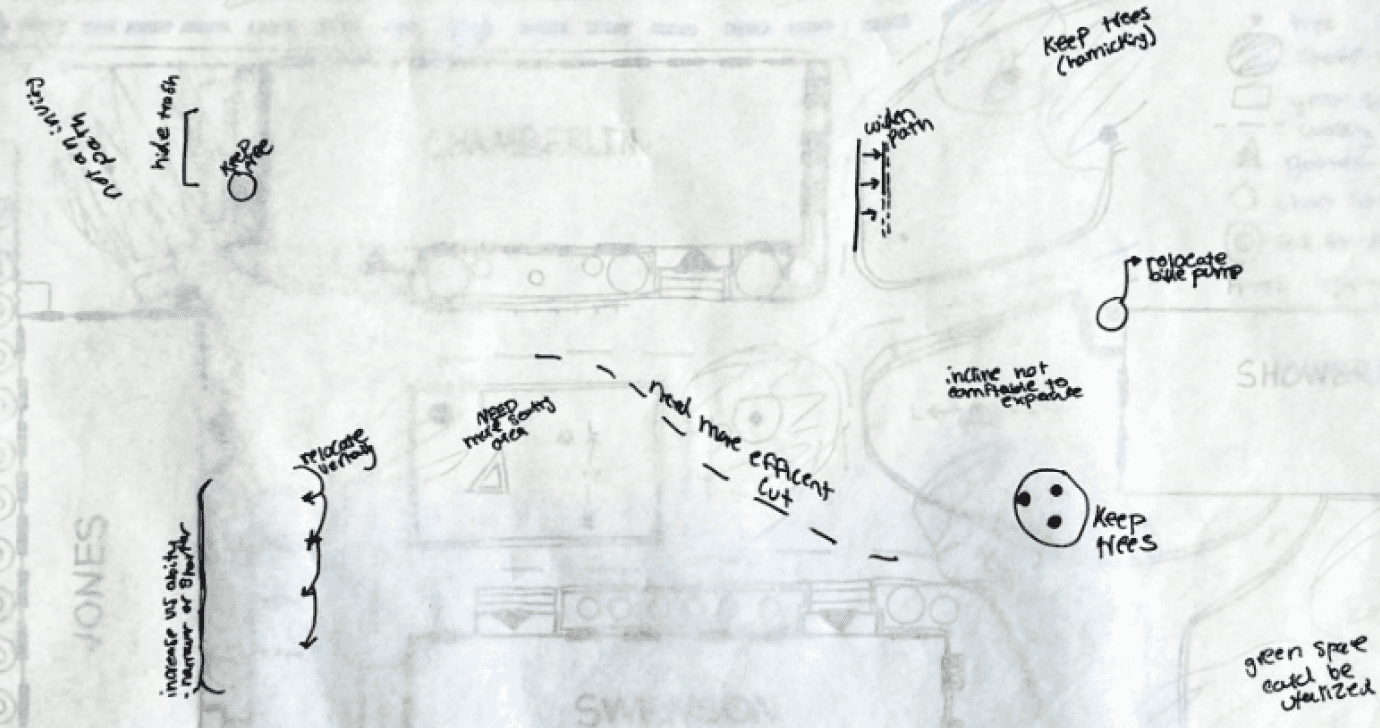
Limited seating
Inefficient common routes.
Restricted circulation
Conceptual Diagramming
How might we redesign the courtyard of Kronshage Residence Hall to improve the overall health of students?
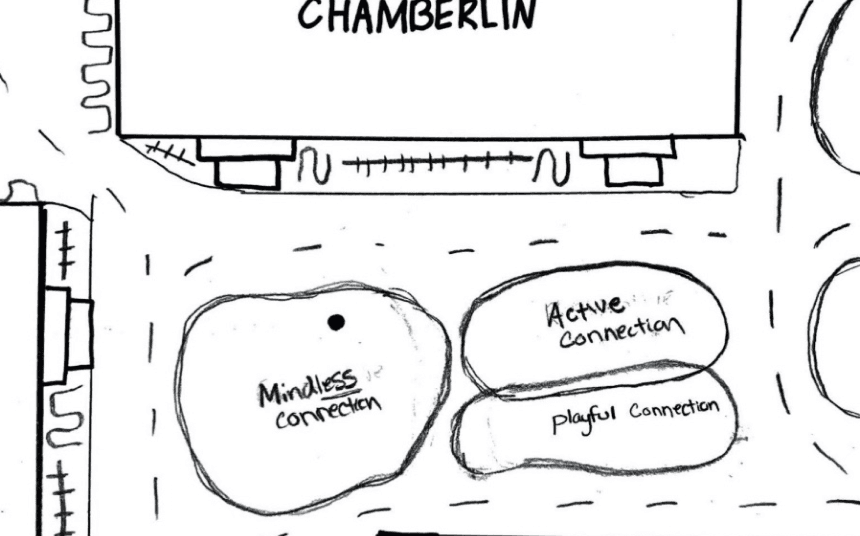
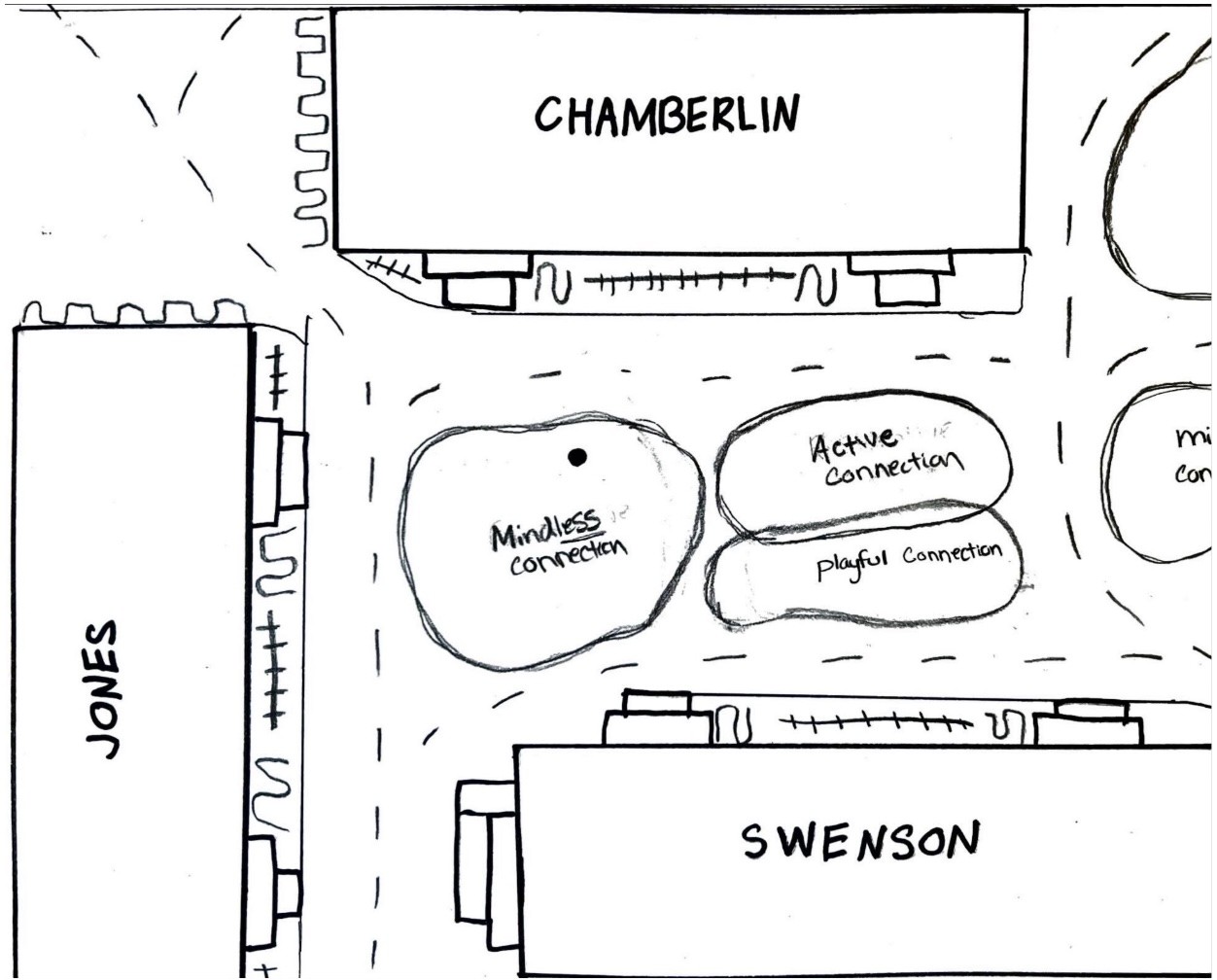
I then used bubble diagrams to explore spatial themes and experiment with how different areas could flow together and complement one another.
Mindless Connection: Help students reconnect with themselves through restorative activities like reading, reflecting, or simply sitting in nature.
Active Connection: Foster meaningful social interaction through shared activities like cooking, movie nights, and creative collaboration.
Playful Connection: Bring students together through the joy of childlike play, featuring physical activities like badminton, volleyball, and other lighthearted games.
After identifying issues like limited outdoor seating and recognizing the mental, physical, and social health challenges college students face, I focused my HMW question on improving overall well-being for residents.
IDEATION
Encourage physical activtity
Increase time spent in nature
Increase social interaction and reduce isolation



Start with observation, not assumptions.
Observe how users move, not just where.
Test ideas at small scale first.
Hand-Drawn Site Plan
AutoCAD
SketchUp
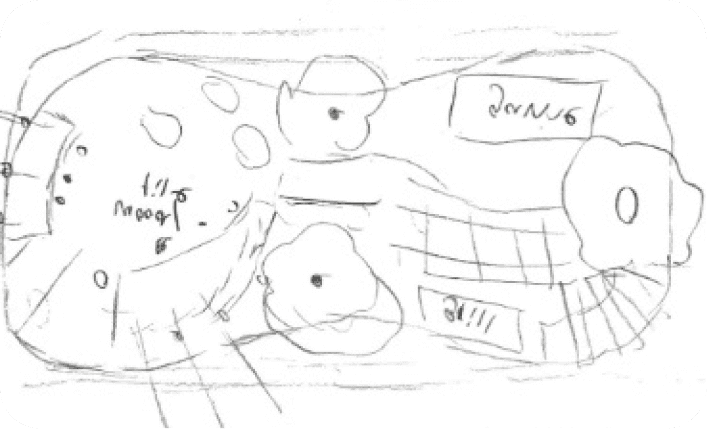
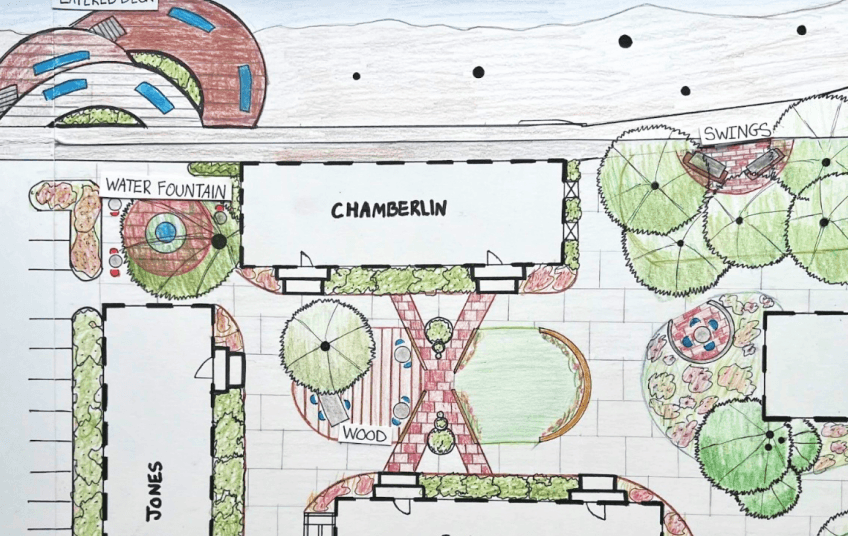
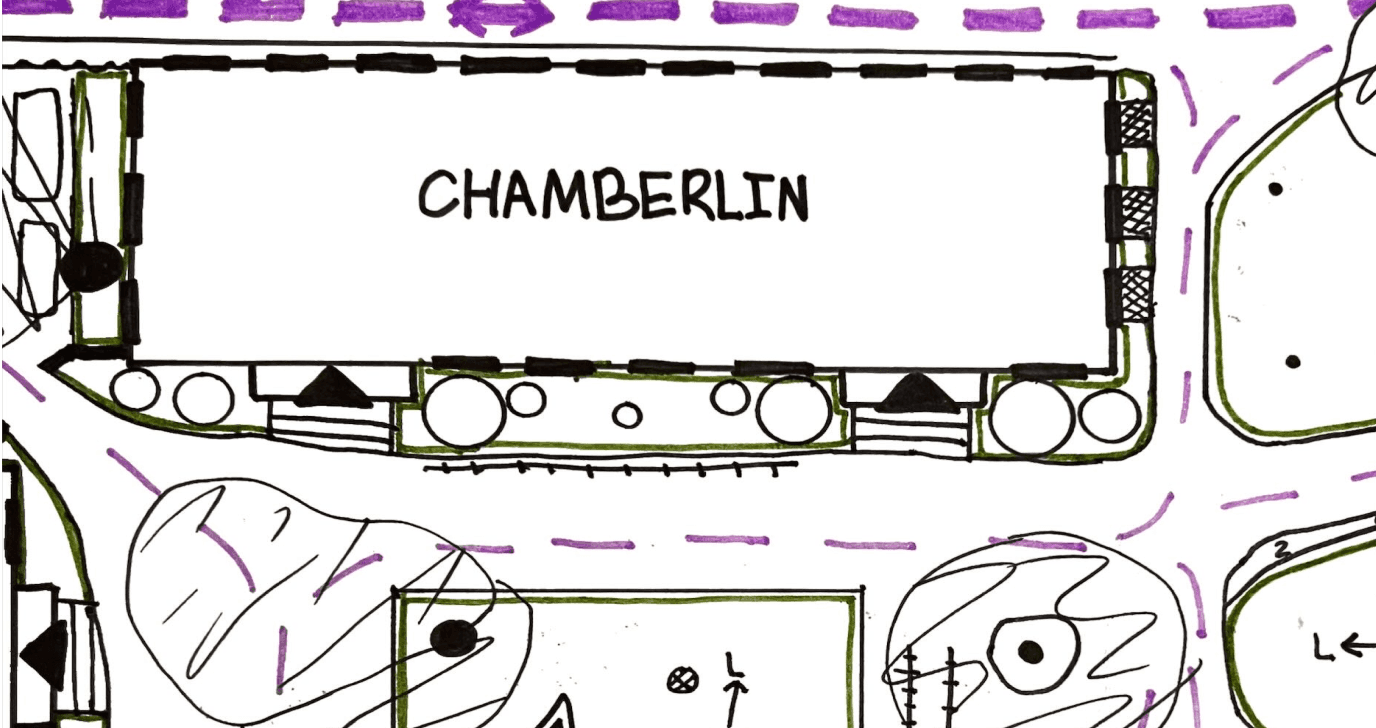
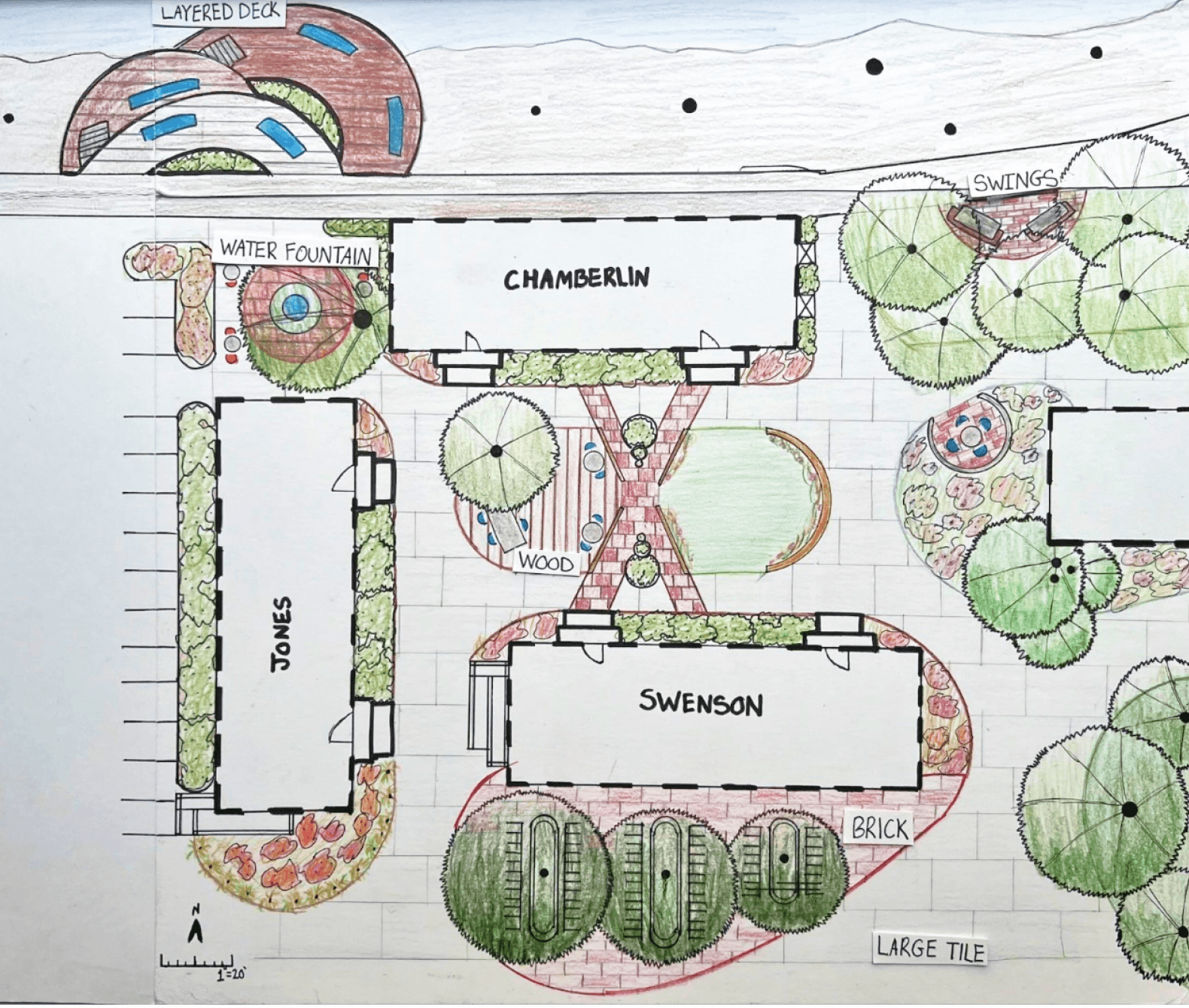
Next, I created a hand-drafted site plan which allowed me to thoughtfully explore spatial relationships and design intent at a human scale.
This step supported ideation and iteration, allowing my concepts to be tested and refined before transitioning into digital 2D and 3D rendering.
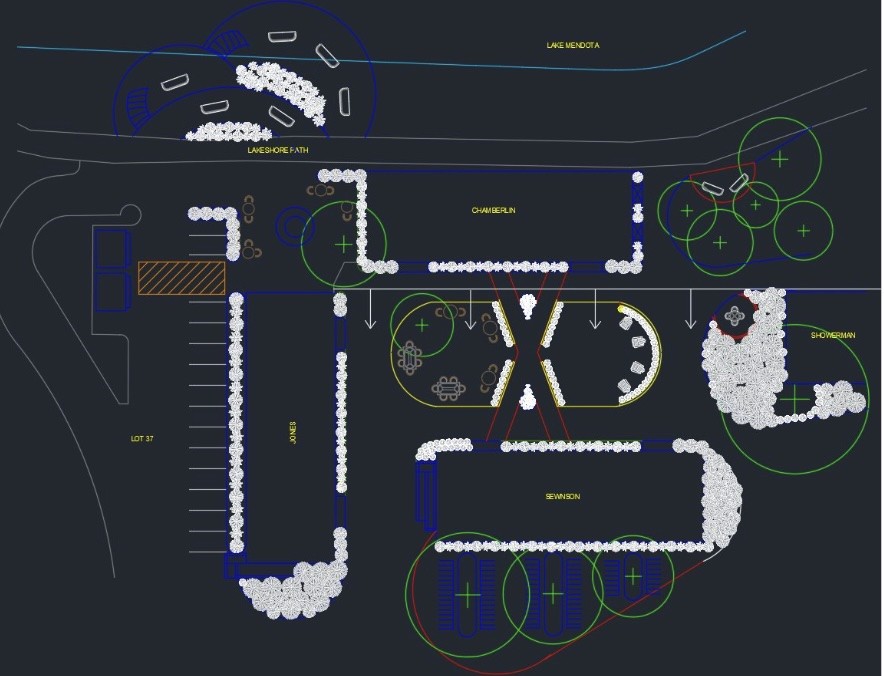
Taking my hand-drafted site plan, I used 2D AutoCAD to create a more precise and detailed version of the design. This helped refine the layout and prepare it for clear communication and future implementation.
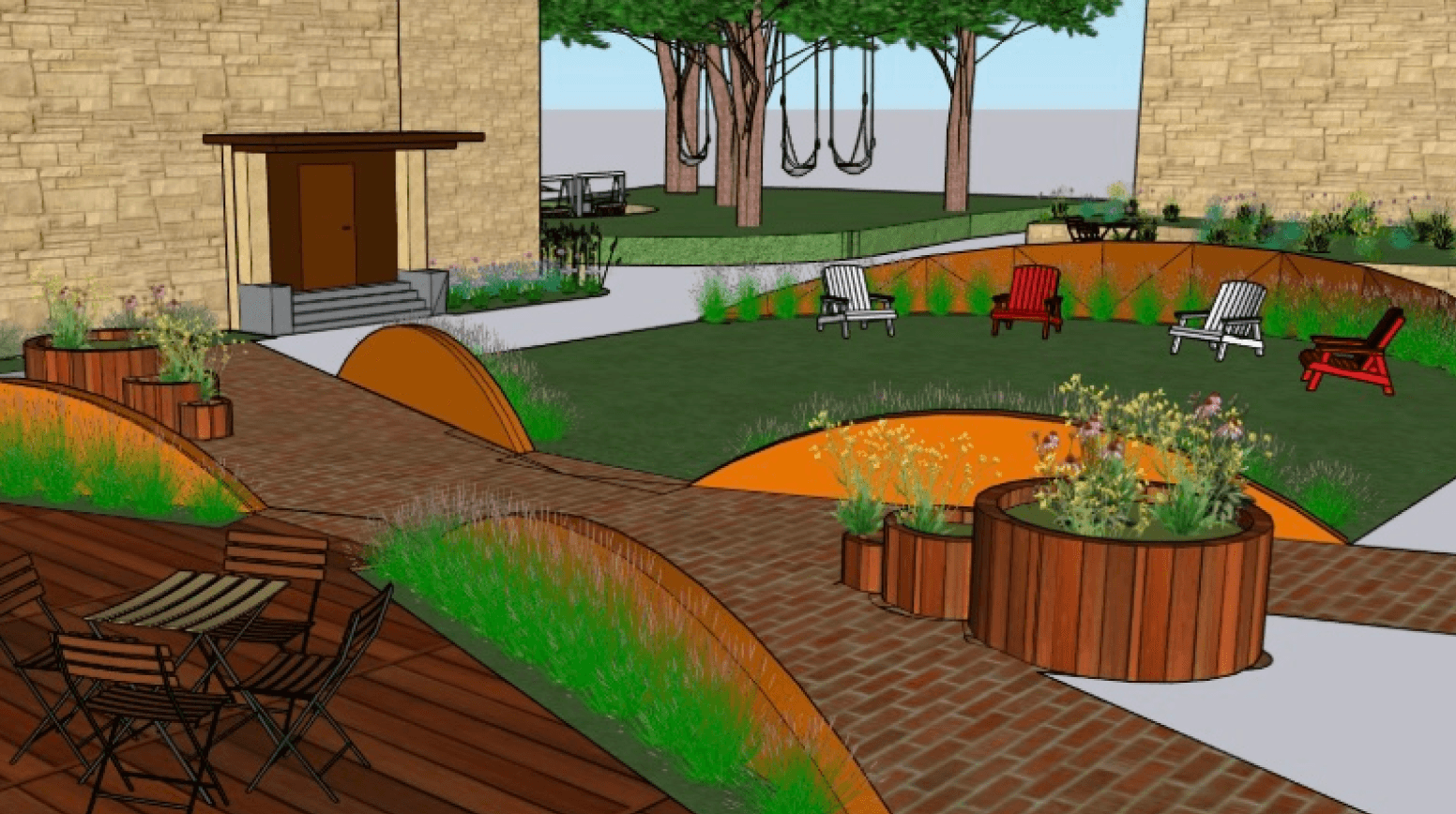
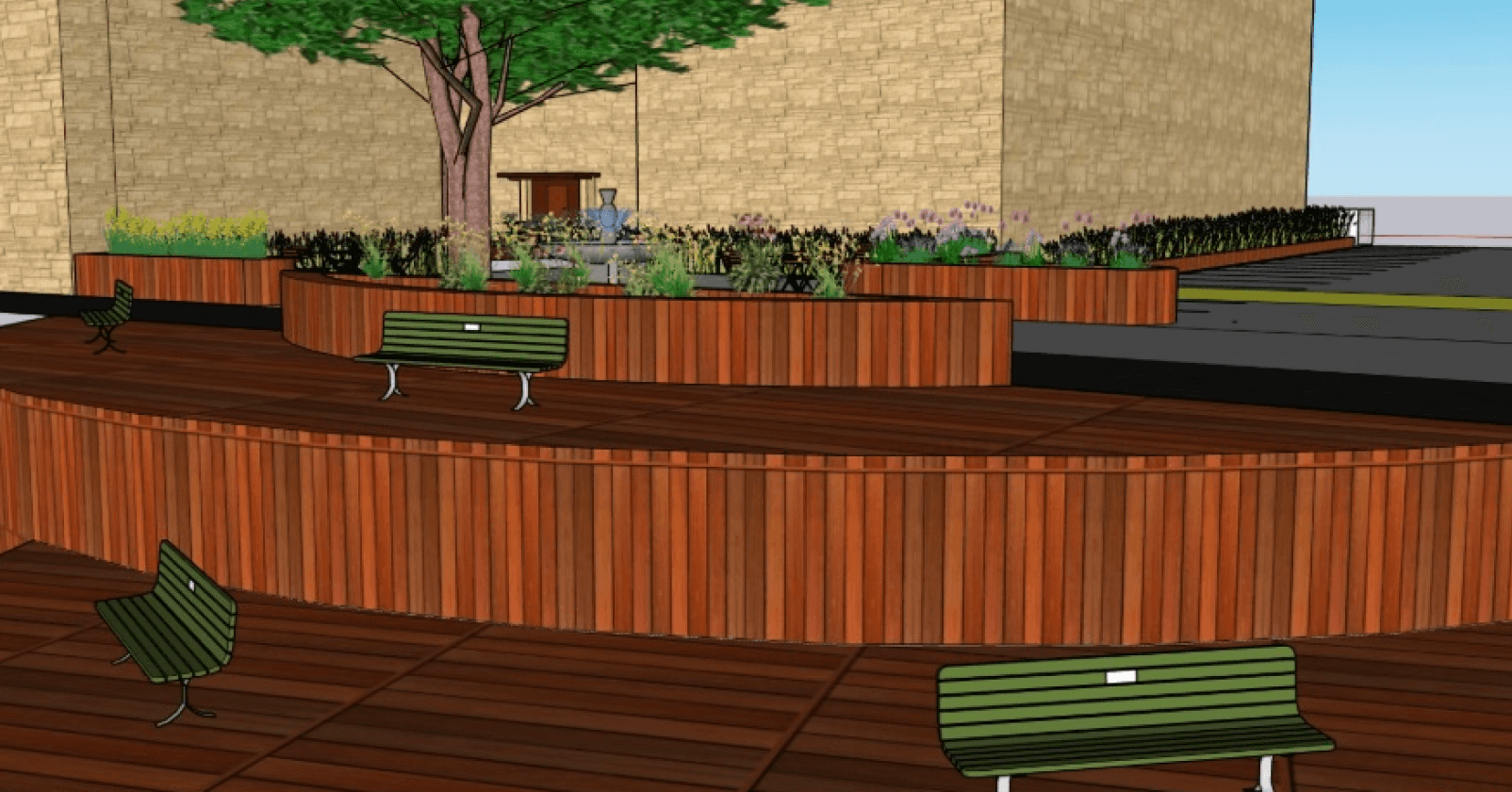
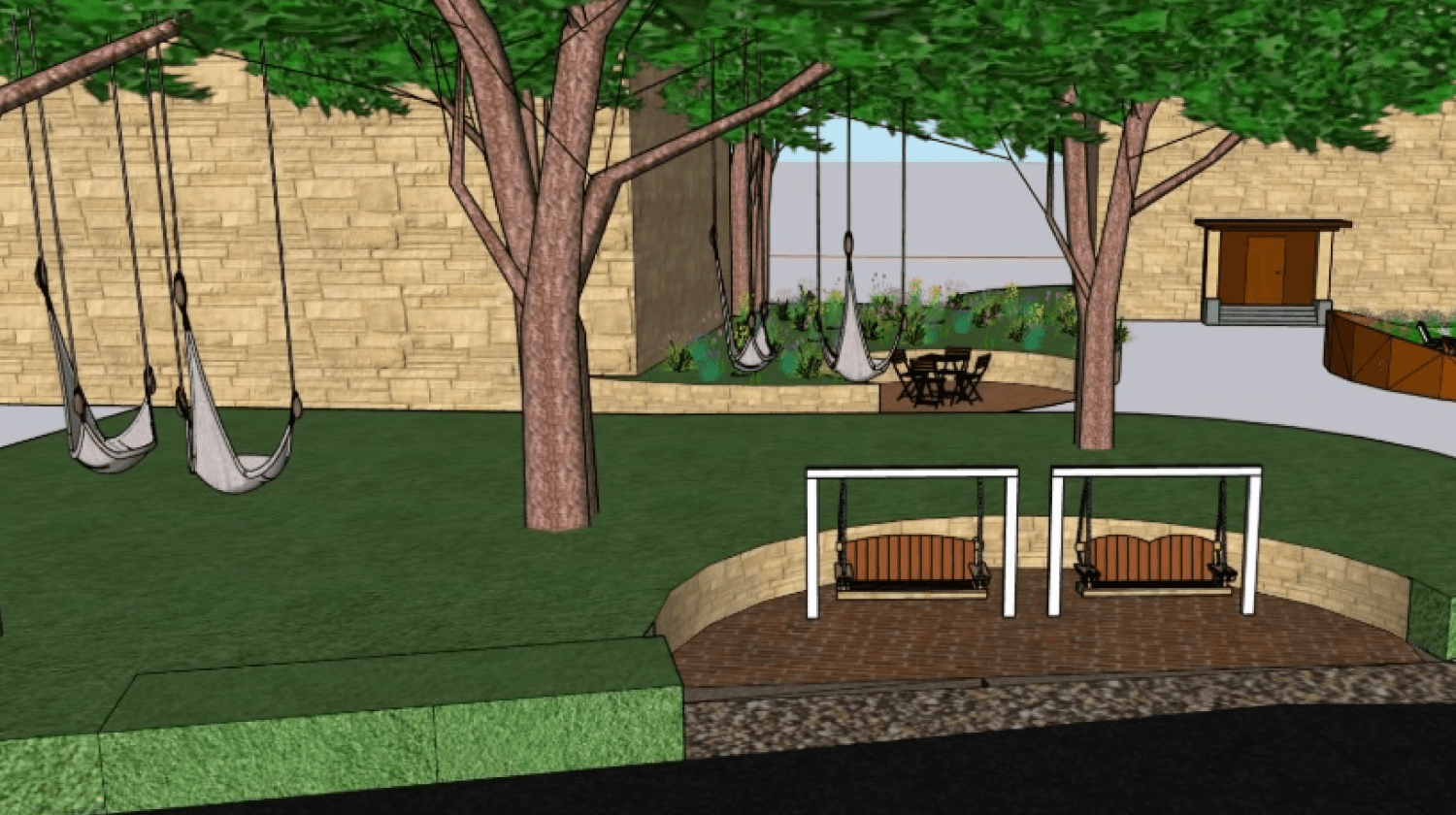
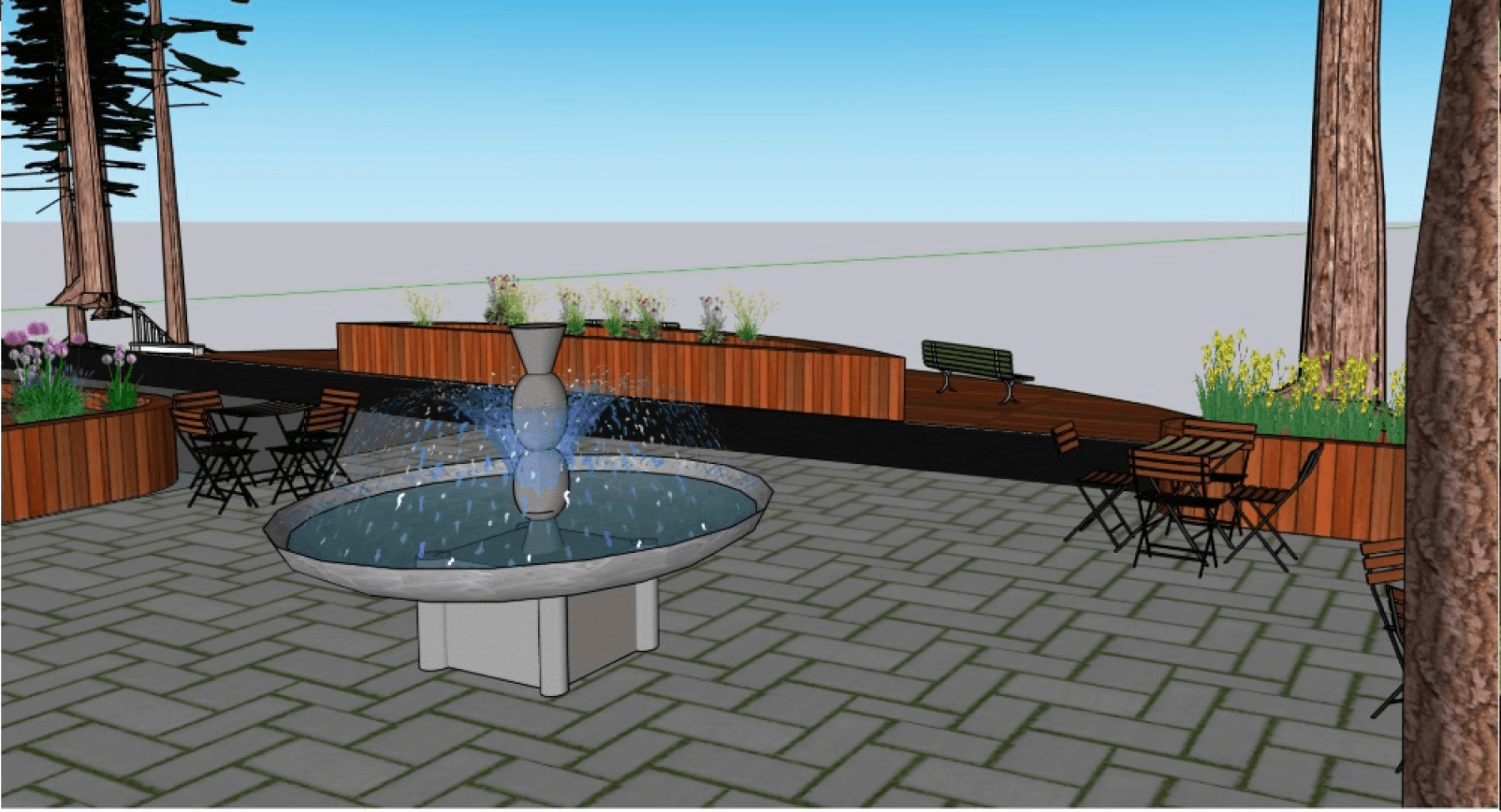
Finally, I brought the design to life using a 3D SketchUp model to visualize form, scale, and spatial experience. This step helped evaluate how users would interact with the space while offering stakeholders a clear and engaging view of the proposed design.
2D & 3D Modeling
Learnings